
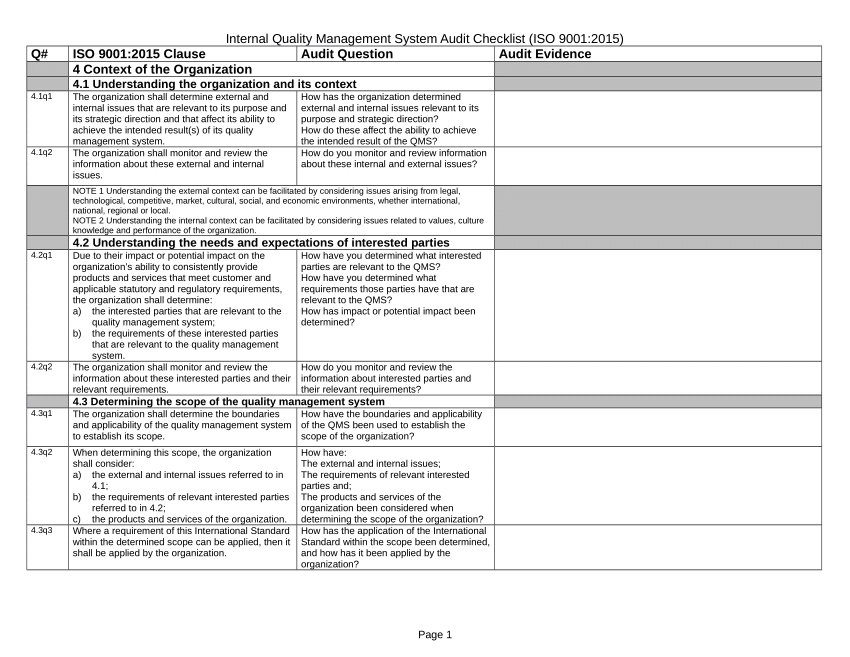
The ISO 9001 standard is widely recognized as the benchmark for quality management systems. It provides organizations with a framework for consistently delivering products and services that meet customer requirements and enhance customer satisfaction. As part of the ISO 9001 certification process, internal audits are conducted to assess the effectiveness of the organization’s quality management system.
Internal audits are an essential component of ISO 9001 as they help identify areas for improvement and ensure compliance with the standard’s requirements. They involve a systematic and independent examination of the organization’s processes, procedures, and records. To conduct a successful internal audit, it is important to have a set of well-defined questions that cover all relevant areas of the quality management system.
In this article, we have compiled a comprehensive list of ISO 9001 internal audit questions and answers to help organizations prepare for their internal audits. These questions cover various aspects of the quality management system, including leadership commitment, customer focus, risk management, and continuous improvement.
See these ISO 9001 Internal Audit Questions and Answers
- How does top management demonstrate their commitment to the quality management system?
- What processes are in place to identify and address customer requirements?
- How are risks and opportunities identified and managed within the organization?
- Are employees aware of their roles and responsibilities in relation to quality management?
- How is customer feedback collected and used to improve products and services?
- What measures are in place to ensure the competence of employees?
- How are suppliers evaluated and selected?
- What procedures are in place to control the design and development of products?
- How are non-conforming products or services identified and managed?
- What methods are used to monitor and measure customer satisfaction?
- How is the effectiveness of internal communication assessed?
- What steps are taken to prevent unauthorized access to sensitive information?
- How are customer complaints handled and resolved?
- What actions are taken to prevent the recurrence of non-conformities?
- How are internal audits planned, conducted, and reported?
- What procedures are in place to ensure the availability of necessary resources?
- How is the performance of suppliers monitored and evaluated?
- What measures are in place to prevent the use of counterfeit parts?
- How are changes to the quality management system controlled and documented?
- What steps are taken to ensure the integrity of data and information?
- How is the effectiveness of corrective actions monitored and reviewed?
- What procedures are in place to manage the organization’s knowledge?
- How is the organization’s compliance with legal and regulatory requirements ensured?
- What measures are in place to ensure the protection of intellectual property?
- How is the performance of the quality management system evaluated?
- What procedures are in place to control the storage and preservation of products?
- How are the organization’s objectives and targets established and communicated?
- What measures are in place to prevent the release of non-conforming products?
- How is the effectiveness of the organization’s training programs evaluated?
- What procedures are in place to identify and mitigate risks to the organization?
- How are customer complaints analyzed to identify trends and improvement opportunities?
- What measures are in place to ensure the traceability of products?
- How is the performance of the quality management system communicated to employees?
- What steps are taken to ensure the confidentiality of customer information?
- How are the organization’s objectives and targets monitored and reviewed?
- What procedures are in place to control the calibration of measuring equipment?
- How is the effectiveness of the organization’s risk management process evaluated?
- What measures are in place to ensure the timely resolution of customer complaints?
- How are the organization’s internal audit findings acted upon and resolved?
- What procedures are in place to control the handling and disposal of non-conforming products?
- How is the performance of the organization’s suppliers communicated and reviewed?
- What measures are in place to prevent the use of obsolete documents?
- How are the organization’s quality objectives aligned with its overall business strategy?
- What procedures are in place to control the identification and traceability of products?
- How is the effectiveness of the organization’s corrective action process evaluated?
These ISO 9001 internal audit questions and answers are intended to serve as a starting point for organizations looking to conduct a thorough assessment of their quality management system. However, it is important to customize these questions to align with the organization’s specific processes and requirements. By conducting regular internal audits and addressing any identified non-conformities, organizations can continuously improve their quality management system and ensure compliance with the ISO 9001 standard.






