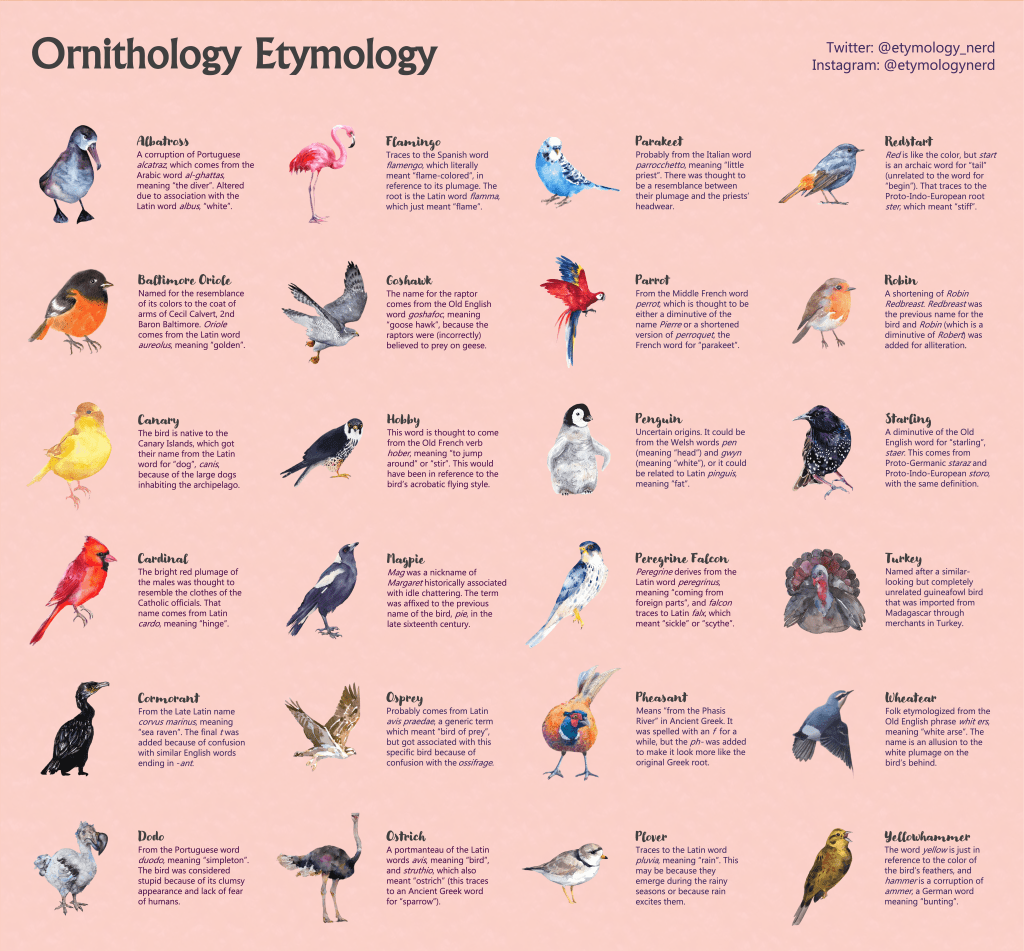
Birds are fascinating creatures that come in a wide variety of shapes, sizes, and colors. Whether you are an avid birdwatcher or simply have an interest in these winged wonders, learning about their scientific names can add another layer of appreciation for their beauty and diversity. In this article, we will explore the Latin names for birds and delve into the significance behind them.
The Latin naming system, also known as binomial nomenclature, was developed by Swedish botanist Carl Linnaeus in the 18th century. It is a standardized way of naming species, where each bird is assigned a unique two-part name. The first part is the genus, which groups together closely related species, and the second part is the specific epithet, which distinguishes one species from another.
Latin names for birds often describe their physical characteristics, behavior, habitat, or commemorate notable ornithologists who made significant contributions to the field. These names allow scientists and bird enthusiasts from different countries to communicate effectively and avoid confusion, as they provide a universal reference for each species.
Choose between these Latin names for bird:
- Accipiter gentilis
- Anas platyrhynchos
- Ardea herodias
- Buteo jamaicensis
- Cathartes aura
- Chordeiles minor
- Columba livia
- Corvus brachyrhynchos
- Egretta thula
- Falco peregrinus
- Gavia immer
- Geococcyx californianus
- Haematopus bachmani
- Haliaeetus leucocephalus
- Larus delawarensis
- Melospiza melodia
- Mergus merganser
- Molothrus ater
- Nycticorax nycticorax
- Pandion haliaetus
- Pelecanus erythrorhynchos
- Pica hudsonia
- Porphyrio martinica
- Progne subis
- Quiscalus quiscula
- Setophaga coronata
- Sialia sialis
- Sitta carolinensis
- Sphyrapicus varius
- Strix varia
- Tachycineta bicolor
- Thryothorus ludovicianus
- Troglodytes aedon
- Turdus migratorius
- Tyrannus tyrannus
- Vireo solitarius
- Xanthocephalus xanthocephalus
- Zenaida macroura
These are just a few examples of the many Latin names for birds that exist. Each name carries a unique significance and tells a story about the species it represents. So the next time you spot a feathered friend, take a moment to appreciate its Latin name and the rich history and knowledge it represents.