
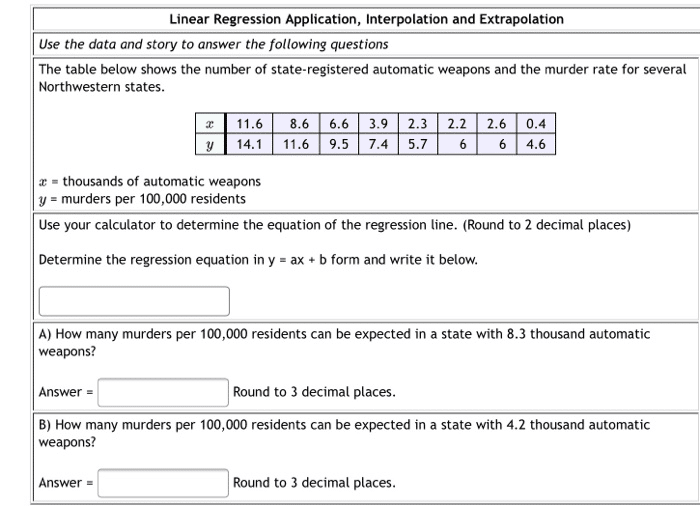
Linear regression is a statistical technique used to establish the relationship between a dependent variable and one or more independent variables. It is a fundamental concept in statistics and plays a crucial role in predictive modeling and data analysis. If you are studying linear regression or preparing for an interview, it’s important to have a good understanding of the subject and be prepared with answers to common questions. In this article, we will provide a comprehensive list of linear regression questions and answers to help you ace your exams or interviews.
See these Linear Regression Questions and Answers
- What is linear regression?
- What are the assumptions of linear regression?
- What is the difference between simple linear regression and multiple linear regression?
- How do you interpret the slope coefficient in linear regression?
- What is the coefficient of determination (R-squared) in linear regression?
- What does a p-value represent in linear regression?
- What is the purpose of residual analysis in linear regression?
- What is multicollinearity in multiple linear regression?
- What is the difference between correlation and regression?
- What is the purpose of the intercept term in linear regression?
- What is heteroscedasticity in linear regression?
- What is the meaning of an outlier in linear regression?
- How do you handle missing values in linear regression?
- How do you check for linearity in linear regression?
- What is the Gauss-Markov theorem in linear regression?
- What is the purpose of the F-test in linear regression?
- What is the purpose of the t-test in linear regression?
- What are the advantages and disadvantages of linear regression?
- What is the difference between ordinary least squares (OLS) and generalized least squares (GLS)?
- What is the purpose of cross-validation in linear regression?
- What is the difference between in-sample and out-of-sample prediction in linear regression?
- What is the purpose of regularization in linear regression?
- What is the difference between L1 and L2 regularization in linear regression?
- What is the purpose of feature scaling in linear regression?
- How do you handle categorical variables in linear regression?
- What is the purpose of interaction terms in linear regression?
- What is the difference between stepwise regression and backward elimination in linear regression?
- What is the purpose of dummy variables in linear regression?
- How do you interpret the p-values of dummy variables in linear regression?
- What is the purpose of the Akaike information criterion (AIC) in linear regression?
- What is the purpose of the Bayesian information criterion (BIC) in linear regression?
- What is the difference between ridge regression and lasso regression?
- What is the purpose of the elastic net in linear regression?
- What is the purpose of VIF (variance inflation factor) in linear regression?
- What is the difference between homoscedasticity and heteroscedasticity in linear regression?
- What is the purpose of Cook’s distance in linear regression?
- What are the assumptions of logistic regression?
- What is the difference between linear regression and logistic regression?
- What is the purpose of residual plots in linear regression?
- What is the purpose of leverage in linear regression?
- What is the difference between influential points and outliers in linear regression?
- What is the purpose of the Durbin-Watson test in linear regression?
- What is the purpose of the Jarque-Bera test in linear regression?
This is just a small sample of the many possible linear regression questions you may encounter. It’s important to study and understand the concepts thoroughly to be well-prepared for any linear regression-related questions that may arise in exams or interviews. Good luck!






