
In today’s fast-paced and interconnected world, conflicts are bound to arise in various aspects of life, be it personal relationships, business partnerships, or legal disputes. When faced with such conflicts, mediation provides a valuable solution to facilitate peaceful resolutions and avoid costly litigation. However, successful mediation heavily relies on asking the right questions to uncover underlying issues and foster effective communication between parties involved. In this article, we will explore the importance of mediation questions and provide you with a comprehensive list of 40 questions to guide your mediation process.
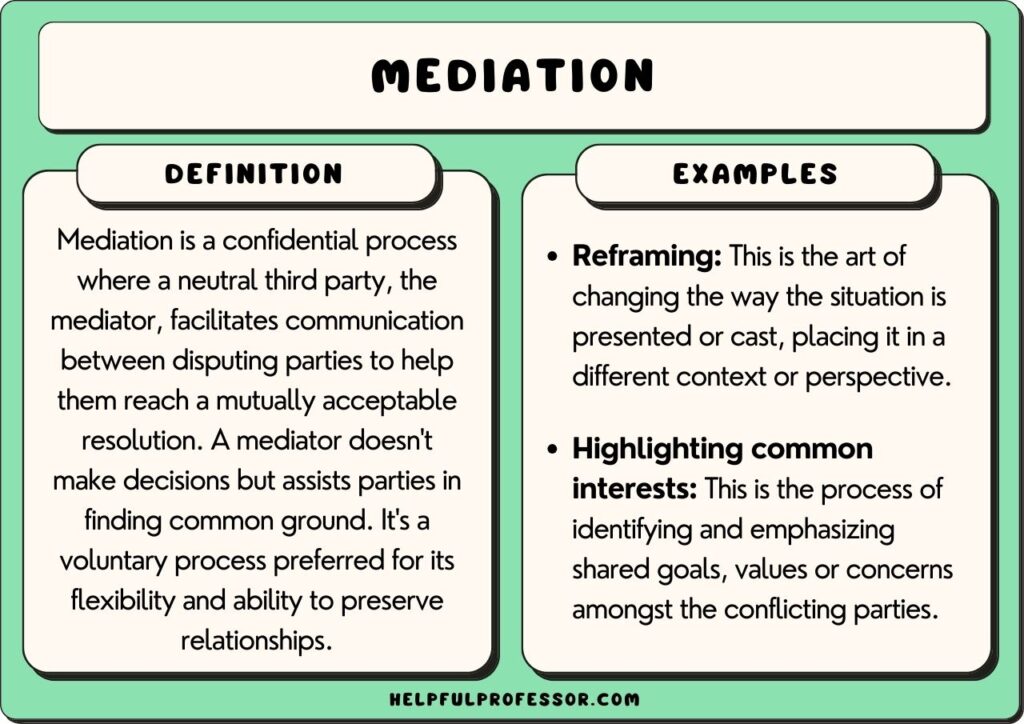
Mediation is a structured and voluntary process where a neutral third party, the mediator, helps disputing parties communicate and negotiate towards a mutually acceptable agreement. The mediator’s role is to facilitate dialogue, manage emotions, and encourage problem-solving. One of the mediator’s key tools is asking questions that promote understanding, introspection, and empathy. By asking the right questions, mediators can uncover the interests, needs, and concerns of each party, paving the way for creative solutions and compromise.
When engaging in mediation, it is essential to approach the process with an open mind and a willingness to listen. Mediation questions serve as catalysts for reflection and encourage participants to express their perspectives genuinely. Through active listening and thoughtful questioning, mediators can guide the conversation towards identifying common ground, exploring alternative options, and ultimately reaching a resolution that satisfies all parties involved.
See these mediation questions
- What are your main concerns regarding this conflict?
- How do you think the other party perceives the situation?
- What would you like to achieve through mediation?
- Can you describe any previous attempts at resolving this conflict?
- What are the underlying interests driving your position?
- How would you define a fair and equitable resolution?
- What compromises are you willing to make?
- What impact has this conflict had on your personal/professional life?
- Are there any cultural or personal factors that may influence your perspective?
- What do you think is the other party’s biggest concern?
- Can you share any potential solutions you have considered?
- How would you picture an ideal resolution to this conflict?
- What emotions are you experiencing in relation to this conflict?
- What obstacles do you foresee in reaching a resolution?
- How can we ensure effective communication throughout this process?
- What steps are you willing to take to rebuild trust?
- What are your expectations from the mediator?
- Are there any legal constraints we should consider?
- How can we ensure that both parties feel heard and understood?
- What are the potential consequences if this conflict remains unresolved?
- What lessons have you learned from previous conflicts?
- How can we prevent similar conflicts from arising in the future?
- What compromises have you made in the past to resolve conflicts?
- What are the non-negotiable points for you in this conflict?
- How do you envision the ideal working relationship with the other party?
- What do you believe is the main cause of this conflict?
- What do you think is the other party’s perspective on this cause?
- What potential solutions have you explored outside of mediation?
- What are the consequences of not reaching a resolution?
- How can we ensure confidentiality and trust throughout this process?
- What communication methods have been most effective for you in the past?
- What support do you need from your organization to resolve this conflict?
- How can we address any power imbalances in this mediation?
- What are the potential benefits of reaching a resolution?
- What are the potential risks of engaging in mediation?
- Are there any external factors that may impact the resolution process?
- How can we maintain open lines of communication after reaching an agreement?
- What role do emotions play in this conflict?
- What are your concerns about involving third parties in the mediation?
- What steps can we take to rebuild damaged relationships?
- What alternative dispute resolution methods have you considered?
- How can we ensure a fair distribution of power in the resolution process?
By utilizing these mediation questions, you can foster a constructive dialogue and guide the mediation process towards a satisfactory resolution. Remember, effective mediation relies on active listening, empathy, and a commitment to finding common ground. With the right questions and a skilled mediator, conflicts can be transformed into opportunities for growth and understanding.






