
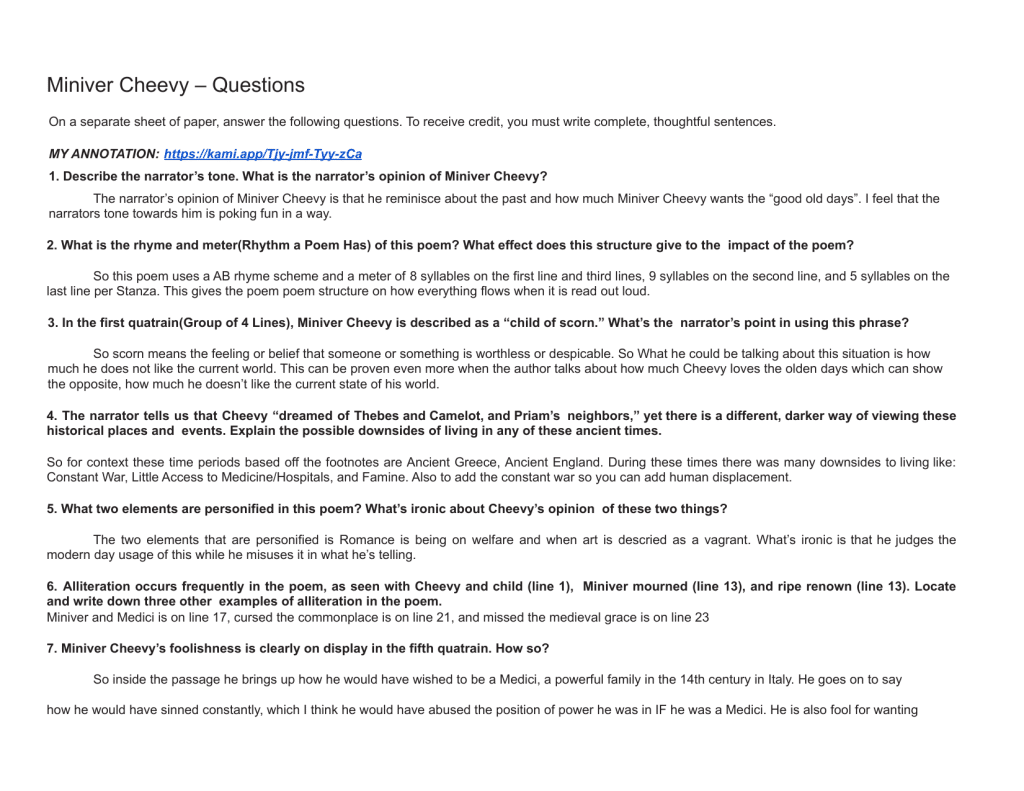
Miniver Cheevy is a famous poem written by Edwin Arlington Robinson. It portrays the life of a man who is dissatisfied with his own reality and instead lives in a fantasy world. The poem explores themes of escapism, regret, and the longing for a different era. It has become a popular topic of discussion among literature enthusiasts, and many questions arise from its thought-provoking content.
In this article, we will delve into some of the most frequently asked Miniver Cheevy questions. Whether you are a student studying this poem or simply curious about its underlying meaning, these questions will help you gain a deeper understanding of its themes and messages.
So, let’s explore the world of Miniver Cheevy and unravel the complexities that lie within!
See these Miniver Cheevy Questions
- What is the central theme of the poem?
- How does Miniver Cheevy escape reality?
- What is the significance of the title “Miniver Cheevy”?
- Why does Miniver Cheevy idealize the past?
- What is the role of alcohol in Miniver Cheevy’s life?
- How does Miniver Cheevy view himself?
- What is the meaning behind the line “Miniver loved the days of old”?
- What is the impact of Miniver Cheevy’s daydreaming on his present life?
- What does the poem say about the concept of nostalgia?
- Why does Miniver Cheevy feel dissatisfied with his own era?
- How does Miniver Cheevy’s escapism affect his relationships?
- Does Miniver Cheevy ever confront his own reality?
- What is the role of societal expectations in Miniver Cheevy’s dissatisfaction?
- Is there any irony in Miniver Cheevy’s idealization of the past?
- What is the significance of the line “Miniver cursed the commonplace”?
- Does Miniver Cheevy ever find happiness in his fantasies?
- What is the poet’s intention in portraying Miniver Cheevy as a tragic character?
- How does Miniver Cheevy’s longing for the past reflect human nature?
- What does the poem suggest about the consequences of escapism?
- What is the overall tone of the poem?
- Does Miniver Cheevy’s character undergo any transformation throughout the poem?
- How does the structure of the poem contribute to its meaning?
- What role does societal judgment play in Miniver Cheevy’s life?
- Is there a specific reason why Miniver Cheevy idolizes medieval times?
- What is the significance of Miniver Cheevy’s dissatisfaction with his own appearance?
- Does Miniver Cheevy’s daydreaming provide him with any form of escape?
- What is the poet trying to communicate through Miniver Cheevy’s character?
- What does the poem say about the human tendency to romanticize the past?
- How does Miniver Cheevy’s character resonate with the reader?
- What is the role of self-pity in Miniver Cheevy’s life?
- Does Miniver Cheevy’s dissatisfaction stem from his own failures?
- What is the significance of the poem’s ending?
- How does Miniver Cheevy’s escapism affect his perception of reality?
- What does the poem suggest about the dangers of living in a fantasy world?
- Is there any hope for Miniver Cheevy to find contentment?
- What is the poet’s view on the concept of nostalgia?
- How does Miniver Cheevy’s character relate to the poet’s own experiences?
- What is the impact of Miniver Cheevy’s daydreaming on his mental health?
- Does Miniver Cheevy’s longing for the past reflect a dissatisfaction with the present?
- What is the significance of Miniver Cheevy’s admiration for heroic figures?
- How does Miniver Cheevy’s escapism affect his ability to face reality?
- What is the message behind the poem’s portrayal of Miniver Cheevy’s life?
- How does Miniver Cheevy’s character challenge societal norms?
- Does Miniver Cheevy’s character evoke sympathy or judgment from the reader?
- What is the poet’s purpose in writing about Miniver Cheevy’s escapism?
These questions provide a starting point for your exploration of Miniver Cheevy and its underlying themes. By pondering these questions, you will gain a deeper understanding of the poem’s messages and perhaps even relate them to your own experiences. Happy reading and reflecting!






