
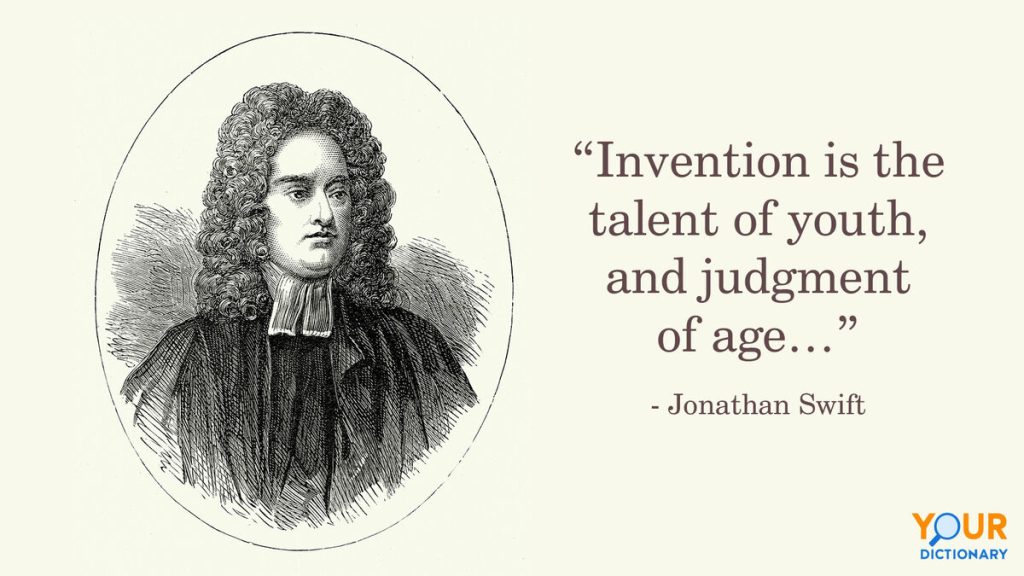
Jonathan Swift’s “A Modest Proposal” is a satirical essay that tackles the issues of poverty and overpopulation in 18th-century Ireland. It offers a shocking and unconventional solution to the problem, suggesting that the poor should sell their children as food for the wealthy. Despite its controversial nature, “A Modest Proposal” is a thought-provoking piece that uses irony and dark humor to highlight the absurdity of the situation. Here are some of the most memorable quotes from this famous essay.
“A Modest Proposal” Quotes:
Read these modest proposal quotes
“I have been assured by a very knowing American of my acquaintance in London, that a young healthy child well nursed is at a year old a most delicious, nourishing, and wholesome food.”
“I grant this food will be somewhat dear, and therefore very proper for landlords, who, as they have already devoured most of the parents, seem to have the best title to the children.”
“I profess, in the sincerity of my heart, that I have not the least personal interest in endeavoring to promote this necessary work, having no other motive than the public good of my country, by advancing our trade, providing for infants, relieving the poor, and giving some pleasure to the rich.”
“I think it is agreed by all parties that this prodigious number of children in the arms or on the backs or at the heels of their mothers, and frequently of their fathers, is in the present deplorable state of the kingdom a very great additional grievance.”
“I have been assured by a very knowing American of my acquaintance in London, that a young healthy child well nursed is at a year old a most delicious, nourishing, and wholesome food, whether stewed, roasted, baked, or boiled; and I make no doubt that it will equally serve in a fricassee or a ragout.”
“I am assured by our merchants that a boy or a girl before twelve years old is no salable commodity; and even when they come to this age they will not yield above three pounds, or three pounds and half-a-crown at most, on the exchange; which cannot turn to account either to the parents or to the kingdom.”
“I can think of no one objection that will possibly be raised against this proposal, unless it should be urged that the number of people will be thereby much lessened in the kingdom.”
“Therefore let no man talk to me of other expedients: of taxing our absentees at 5s. a pound: of using neither clothes nor household furniture except what is of our own growth and manufacture: of utterly rejecting the materials and instruments that promote foreign luxury: of curing the expensiveness of pride, vanity, idleness, and gaming in our women: of introducing a vein of parsimony, prudence, and temperance: of learning to love our country, wherein we differ even from Laplanders, and the inhabitants of Topinamboo: of quitting our animosities and factions.”
“I desire those politicians who dislike my overture, and may perhaps be so bold as to attempt an answer, that they will first ask the parents of these mortals whether they would not at this day think it a great happiness to have been sold for food at a year old in the manner I prescribe, and thereby have avoided such a perpetual scene of misfortunes as they have since gone through by the oppression of landlords, the impossibility of paying rent without money or trade, the want of common sustenance, with neither house nor clothes to cover them from the inclemencies of the weather, and the most inevitable prospect of entailing the like or greater miseries upon their breed for ever.”
“I have too long digressed, and therefore shall return to my subject.”
“I do therefore humbly offer it to public consideration that of the hundred and twenty thousand children already computed, twenty thousand may be reserved for breed, whereof only one-fourth part to be males, which is more than we allow to sheep, black cattle, or swine, and my reason is that these children are seldom the fruits of marriage, a circumstance not much regarded by our savages, therefore one male will be sufficient to serve four females.”
“But as to my own part, having turned my thoughts for many years upon this important subject, and maturely weighed the several schemes of other projectors, I have always found them grossly mistaken in their computation.”
“Thus the squire will learn to be a good landlord, and grow popular among his tenants; the mother will have eight shillings net profit, and be fit for work till she produces another child.”
“I again subtract fifty thousand for those women who miscarry, or whose children die by accident or disease within the year.”
“The remaining hundred thousand may, at a year old, be offered in sale to the persons of quality and fortune through the kingdom.”
“Infant’s flesh will be in season throughout the year, but more plentiful in March, and a little before and after; for we are told by a grave author, an eminent French physician, that fish being a prolific diet, there are more children born in Roman Catholic countries about nine months after Lent than at any other season; therefore, reckoning a year after Lent, the markets will be more glutted than usual, because the number of popish infants is at least three to one in this kingdom: and therefore it will have one other collateral advantage, by lessening the number of papists among us.”
“Some persons of a desponding spirit are in great concern about that vast number of poor people, who are aged, diseased, or maimed; and I have been desired to employ my thoughts what course may be taken to ease the nation of so grievous an encumbrance.”
“As to our city of Dublin, shambles may be appointed for this purpose in the most convenient parts of it, and butchers we may be assured will not be wanting; although I rather recommend buying the children alive, and dressing them hot from the knife, as we do roasting pigs.”
“I am not so violently bent upon my own opinion as to reject any offer proposed by wise men, which shall be found equally innocent, cheap, easy, and effectual.”
“The remedy is easy, and would be of universal use: for if the same use were made of several plump young girls in this town, who, without one single groat to their fortunes, cannot stir abroad without a chair, and appear at a playhouse and assemblies in foreign fineries which they never will pay for, the kingdom would not be the worse.”
“I have already computed the charge of nursing a beggar’s child (in which list I reckon all cottagers, laborers, and four-fifths of the farmers) to be about two shillings per annum, rags included; and I believe no gentleman would repine to give ten shillings for the carcass of a good fat child, which, as I have said before, will make four dishes of excellent nutritive meat.”
“But before something of that kind shall be advanced in contradiction to my scheme, and offering a better, I desire the author or authors will be pleased maturely to consider two points. First, as things now stand, how they will be able to find food and raiment for a hundred thousand useless mouths and backs.”
“I have reckoned upon a medium that a child just born will weigh 12 pounds, and in a solar year, if tolerably nursed, increaseth to 28 pounds.”
These quotes from “A Modest Proposal” showcase Jonathan Swift’s biting wit and clever use of satire to comment on the social and political issues of his time. While the essay may be shocking and controversial, it serves as a reminder of the power of literature to provoke thought and discussion.






