
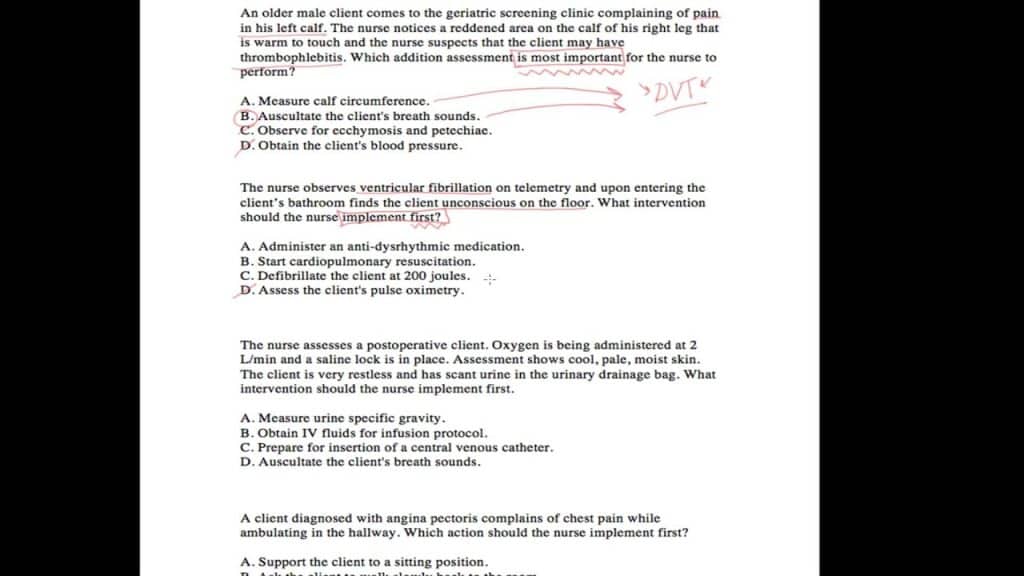
Preparing for the National Council Licensure Examination (NCLEX) can be a daunting task for aspiring nurses. The exam covers a wide range of topics, including prioritization skills, which are essential for providing effective patient care. Prioritization questions on the NCLEX assess a nurse’s ability to determine the most urgent needs of multiple patients and allocate resources accordingly.
Mastering prioritization skills is crucial for nurses as they often find themselves in high-pressure situations where quick decision-making is required. These skills enable nurses to efficiently manage their time and resources, ensuring that patients receive the care they need in a timely manner. To help you prepare for the NCLEX, we have compiled a list of prioritization questions that will test your ability to prioritize patient care effectively.
Remember, the key to answering prioritization questions correctly is considering the ABCs – Airway, Breathing, and Circulation. These are the fundamental needs of any patient and should always be the top priority. Additionally, consider the principles of Maslow’s Hierarchy of Needs, which prioritize physiological needs over psychological or self-fulfillment needs.
See these Nclex Questions on Prioritization
- A patient is experiencing shortness of breath and chest pain. Another patient is requesting pain medication. Which patient should the nurse attend to first?
- A post-operative patient is complaining of severe pain. Another patient has a blood pressure reading of 180/100. Who should the nurse see first?
- A patient on a ventilator has an alarm sounding indicating a disconnection. Another patient is requesting assistance to the bathroom. Which patient should the nurse prioritize?
- An elderly patient is experiencing confusion and disorientation. Another patient is scheduled for a physical therapy session. Who should the nurse attend to first?
- A patient with a history of diabetes is experiencing hypoglycemia. Another patient has a prescription for a routine blood test. Who should the nurse prioritize?
- A patient is experiencing severe bleeding following a surgical procedure. Another patient is complaining of nausea and vomiting. Who should the nurse see first?
- An infant is having difficulty breathing and turning blue. Another patient is requesting a glass of water. Who should the nurse prioritize?
- A patient with a history of heart failure is experiencing shortness of breath. Another patient is requesting assistance with meal preparation. Who should the nurse attend to first?
- A patient with a head injury is experiencing altered consciousness. Another patient is scheduled for a routine physical examination. Who should the nurse prioritize?
- A patient is experiencing a severe allergic reaction with difficulty breathing. Another patient is requesting a pillow for comfort. Who should the nurse see first?
- An elderly patient is at risk of falling due to unsteady gait. Another patient is scheduled for a routine vaccination. Who should the nurse attend to first?
- A patient is experiencing chest pain and sweating. Another patient is requesting assistance with repositioning. Who should the nurse prioritize?
- A post-operative patient is experiencing a high fever. Another patient is requesting assistance with personal hygiene. Who should the nurse see first?
- A patient is experiencing sudden loss of vision. Another patient is requesting assistance with signing discharge paperwork. Who should the nurse prioritize?
- A patient with a chronic illness is experiencing a medication reaction. Another patient is requesting assistance with ambulation. Who should the nurse attend to first?
- A patient is experiencing a seizure. Another patient is requesting a blanket. Who should the nurse prioritize?
- A pregnant patient is experiencing vaginal bleeding. Another patient is requesting a magazine to read. Who should the nurse see first?
- A patient is experiencing severe abdominal pain. Another patient is requesting assistance with changing the television channel. Who should the nurse prioritize?
- A patient with a history of stroke is experiencing sudden weakness on one side of the body. Another patient is requesting assistance with phone use. Who should the nurse attend to first?
- A patient is experiencing difficulty breathing and wheezing. Another patient is requesting assistance with reaching a water glass. Who should the nurse prioritize?
- A pediatric patient is experiencing a high-grade fever. Another patient is requesting assistance with meal selection. Who should the nurse see first?
- A patient is experiencing a panic attack. Another patient is requesting assistance with adjusting the room temperature. Who should the nurse prioritize?
- A patient with a history of heart disease is experiencing chest pain. Another patient is requesting assistance with opening a snack. Who should the nurse attend to first?
- A patient is experiencing a sudden loss of consciousness. Another patient is requesting assistance with finding a lost phone. Who should the nurse prioritize?
- A patient with a history of asthma is experiencing difficulty breathing. Another patient is requesting assistance with finding a television remote. Who should the nurse see first?
- A patient is experiencing severe diarrhea and dehydration. Another patient is requesting assistance with filling out a form. Who should the nurse prioritize?
- A patient with a history of mental illness is exhibiting aggressive behavior. Another patient is requesting assistance with arranging a phone call. Who should the nurse prioritize?
- A patient is experiencing a severe burn injury. Another patient is requesting assistance with filling a water bottle. Who should the nurse see first?
- A patient with a history of kidney disease is experiencing sudden flank pain. Another patient is requesting assistance with adjusting the room lighting. Who should the nurse attend to first?
- A patient is experiencing a suspected heart attack. Another patient is requesting assistance with adjusting the bed position. Who should the nurse prioritize?
- A post-operative patient is experiencing sudden shortness of breath. Another patient is requesting assistance with retrieving personal belongings. Who should the nurse see first?
- A patient is experiencing a severe allergic reaction with facial swelling. Another patient is requesting assistance with finding a television remote. Who should the nurse prioritize?
- A patient with a history of epilepsy is experiencing a seizure. Another patient is requesting assistance with adjusting the room temperature. Who should the nurse attend to first?
- A patient is experiencing severe back pain. Another patient is requesting assistance with reaching a water glass. Who should the nurse prioritize?
- A patient with a history of diabetes is experiencing hypoglycemia. Another patient is requesting assistance with turning on the television. Who should the nurse see first?
- A patient is experiencing sudden and severe headache. Another patient is requesting assistance with adjusting the room lighting. Who should the nurse prioritize?
- A patient with a history of heart disease is experiencing chest pain. Another patient is requesting assistance with finding a misplaced item. Who should the nurse attend to first?
- A patient is experiencing a suspected stroke. Another patient is requesting assistance with adjusting the bed position. Who should the nurse prioritize?
- A post-operative patient is experiencing sudden onset confusion. Another patient is requesting assistance with choosing a television program. Who should the nurse see first?
- A patient is experiencing severe bleeding following a traumatic injury. Another patient is requesting assistance with adjusting the room temperature. Who should the nurse prioritize?
- A patient with a history of asthma is experiencing difficulty breathing. Another patient is requesting assistance with retrieving personal belongings. Who should the nurse attend to first?
- A patient is experiencing severe abdominal pain. Another patient is requesting assistance with finding a lost phone. Who should the nurse see first?
- A patient with a history of heart failure is experiencing shortness of breath. Another patient is requesting assistance with adjusting the room lighting. Who should the nurse prioritize?
- A patient is experiencing sudden loss of consciousness. Another patient is requesting assistance with filling a water bottle. Who should the nurse attend to first?
- A patient with a history of diabetes is experiencing hypoglycemia. Another patient is requesting assistance with arranging a phone call. Who should the nurse see first?
- A patient is experiencing severe chest pain and sweating. Another patient is requesting assistance with finding a television remote. Who should the nurse prioritize?
- A patient with a head injury is experiencing altered consciousness. Another patient is requesting assistance with adjusting the room temperature. Who should the nurse attend to first?
These questions are designed to challenge your prioritization skills and help you prepare for the NCLEX. Practice answering them to gain confidence and improve your ability to make quick and accurate decisions in a healthcare setting.






