
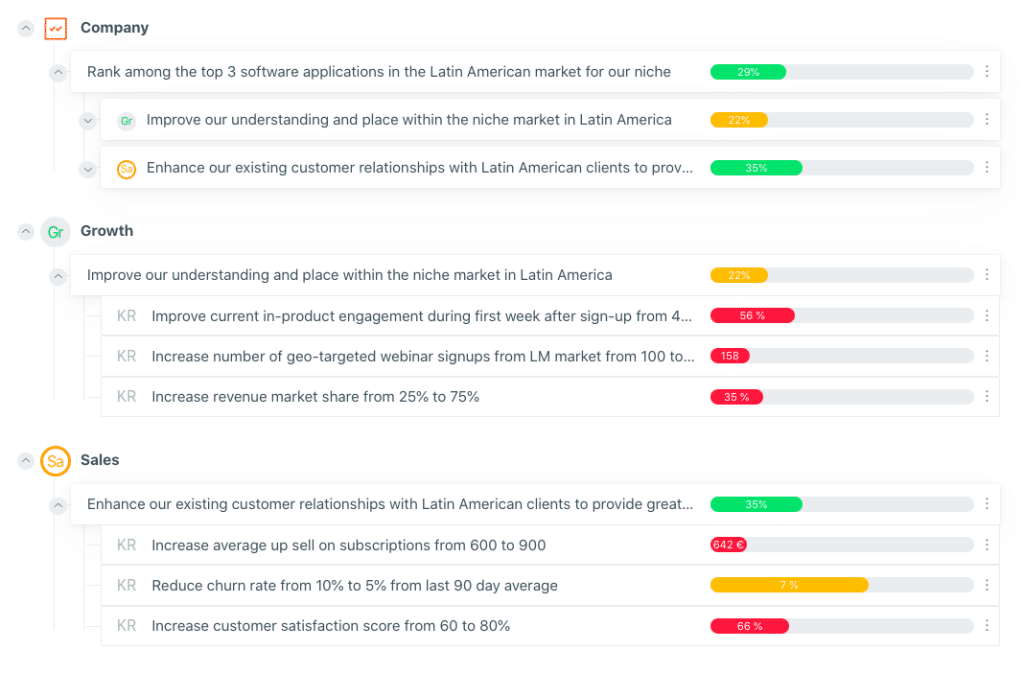
In today’s fast-paced business environment, setting clear objectives and key results (OKRs) is crucial for organizations to stay focused and achieve their goals. OKRs provide a framework that aligns individual and team efforts with the overall vision and strategy of the company. However, formulating effective OKRs requires careful thought and consideration. This article explores some common questions that can help guide the OKR creation process and ensure clarity and alignment.
When developing OKRs, it’s essential to ask the right questions to define specific and measurable objectives. By asking these questions, teams can gain a deeper understanding of what they want to achieve and how to measure their progress effectively. Additionally, asking thought-provoking questions encourages critical thinking and can lead to more ambitious and impactful OKRs. Let’s delve into some of these questions.
One essential question to consider when setting OKRs is “What is the desired outcome?” Clearly defining the desired outcome helps set a clear direction for the objective. Another crucial question is “How will success be measured?” Establishing measurable key results is vital to track progress and evaluate the effectiveness of the objectives. Additionally, asking “Why is this objective important?” ensures that the objective is aligned with the company’s overall strategy and priorities.
See these okr questions
- What are the top priorities for this quarter?
- What specific actions can be taken to achieve the objectives?
- Are the objectives challenging but attainable?
- How will progress be tracked and measured?
- What resources are required to achieve the objectives?
- Are the objectives aligned with the company’s mission and values?
- Are there any potential obstacles or risks that need to be considered?
- What is the timeline for achieving the objectives?
- How will the success of the objectives be communicated to stakeholders?
- What can be learned from previous OKRs and how can they be improved?
- What are the key metrics that will indicate progress?
- Do the objectives contribute to the overall growth and success of the company?
- Are the objectives specific and actionable?
- How will the objectives be cascaded down to individual team members?
- What support or training is needed to achieve the objectives?
- Are the objectives aligned with the team’s capabilities and expertise?
- What are the potential benefits of achieving the objectives?
- How can the objectives be broken down into smaller milestones?
- Are the objectives aligned with current market trends and customer needs?
- What is the level of commitment and buy-in from team members?
- How will the objectives contribute to the company’s long-term vision?
- What is the level of urgency and priority for each objective?
- How will the objectives be communicated and shared across the organization?
- What feedback mechanisms will be in place to track progress and make adjustments?
- Are the objectives ambitious enough to drive innovation and growth?
- What are the potential trade-offs and sacrifices required to achieve the objectives?
- How will the objectives be aligned with other teams and departments?
- Are the objectives realistic given the available resources and constraints?
- What are the potential risks and rewards associated with each objective?
- How will the objectives contribute to employee engagement and motivation?
- Are the objectives aligned with the company’s financial targets?
- What are the potential benefits of not achieving the objectives?
- What is the level of clarity and understanding of the objectives among team members?
- How will the objectives be tracked and reported on a regular basis?
- Are the objectives aligned with the company’s competitive advantage?
- What is the level of flexibility and adaptability required for each objective?
- How will the objectives be aligned with individual performance goals?
- What is the level of support and commitment from senior leadership?
- Are the objectives aligned with the company’s ethical and sustainability goals?
- What are the potential consequences of not achieving the objectives?
- How will the objectives contribute to customer satisfaction and loyalty?
- Are the objectives aligned with the company’s brand and reputation?
- What are the potential opportunities and threats related to each objective?
By considering these questions during the OKR creation process, organizations can ensure that their objectives are well-defined, measurable, and aligned with the company’s overall vision and strategy. Remember, effective OKRs are not just about setting goals but also about inspiring and motivating teams to achieve exceptional results.






