
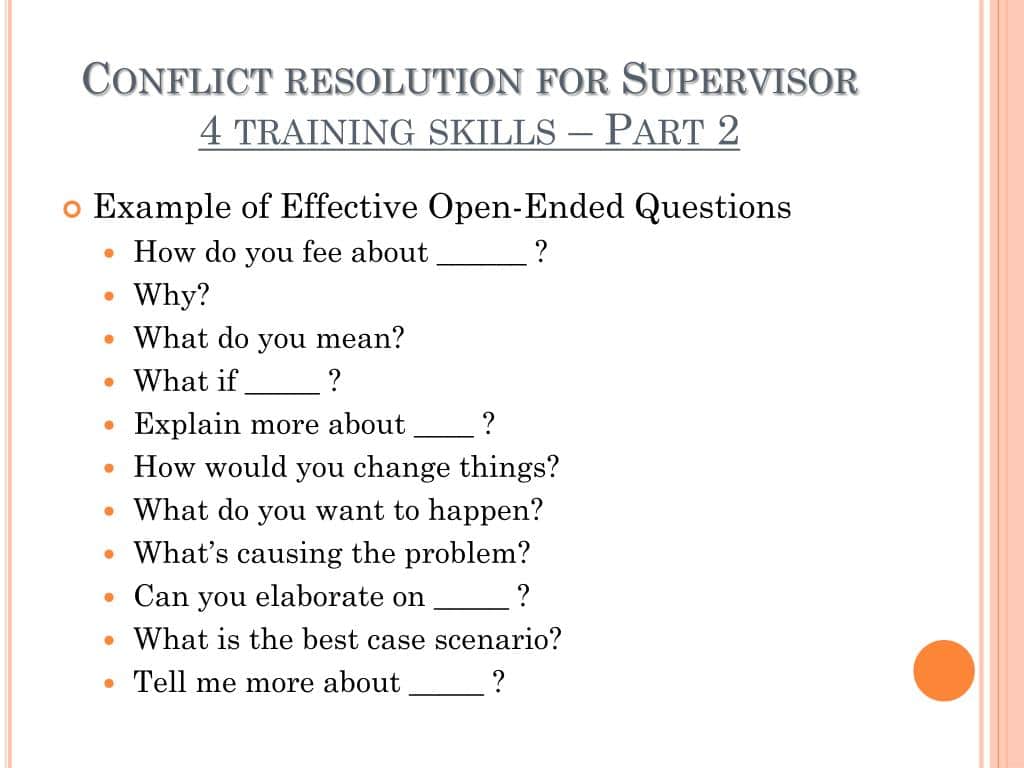
Conflict is an inevitable part of life, whether it occurs in personal relationships, professional settings, or even within ourselves. Resolving conflicts effectively requires open communication and understanding. One valuable tool in conflict resolution is asking open ended questions. These questions encourage dialogue, exploration, and reflection, allowing individuals to gain deeper insights into the root causes of conflict and find mutually beneficial solutions. In this article, we will explore the power of open ended questions in conflict resolution and provide a comprehensive list of questions to help guide the process.
Open ended questions are those that cannot be answered with a simple “yes” or “no.” Instead, they require thoughtful responses and encourage individuals to express their thoughts, feelings, and perspectives. By using open ended questions, conflict resolution can move beyond surface-level issues and delve into the underlying concerns and emotions that contribute to the conflict.
When asking open ended questions for conflict resolution, it is crucial to create a safe and non-judgmental environment. This allows individuals to feel comfortable sharing their thoughts and experiences openly. Active listening is also an essential component of using open ended questions effectively. By truly listening to the responses, conflict resolution can become a collaborative and transformative process.
See these open ended questions for conflict resolution
- What do you think is the main cause of the conflict?
- How does this conflict make you feel?
- What are your expectations for resolving this conflict?
- Can you describe your perspective on the situation?
- What do you think the other person’s perspective is?
- What values or beliefs are important to you in this conflict?
- What would a successful resolution look like to you?
- How do you think we can find a mutually beneficial solution?
- What are some possible compromises that you can suggest?
- How can we rebuild trust and improve communication?
- What do you think each party can do to contribute to the resolution?
- What do you think are the potential consequences if this conflict is not resolved?
- How can we learn and grow from this conflict?
- What support or resources do you think would be helpful in resolving this conflict?
- What steps can we take to prevent similar conflicts in the future?
- How can we ensure that all parties feel heard and validated?
- What are some possible solutions that you haven’t considered yet?
- What compromises are you willing to make to reach a resolution?
- What actions can we take to repair any damage caused by this conflict?
- What are your concerns or fears about the conflict resolution process?
- How can we create an environment of respect and empathy during the resolution?
- What do you think is the most important aspect to focus on for a successful resolution?
- What are some positive aspects or strengths that each party brings to the conflict resolution?
- How can we ensure that everyone’s needs and interests are taken into account?
- What strategies can we use to de-escalate tension and promote understanding?
- What compromises do you think are fair and reasonable?
- How can we find common ground and build upon that?
- What are some potential misunderstandings that may have contributed to the conflict?
- How can we hold each other accountable for our actions and commitments?
- What can we do to ensure that open and honest communication continues after the resolution?
- What do you think is the underlying need or desire behind the conflict?
- How can we create a win-win situation for all parties involved?
- What steps can we take to prevent conflicts from escalating in the future?
- What are some compromises that you think are non-negotiable?
- How can we acknowledge and address any power imbalances that may exist?
- What are some alternative perspectives that we should consider?
- What values or principles do you think should guide our conflict resolution?
- How can we find opportunities for growth and learning through this conflict?
- What can we do to ensure that all parties feel satisfied with the resolution?
- What are some potential solutions that you think might be outside the box?
- How can we ensure that emotions are managed effectively during the resolution?
- What can we learn from past conflicts to inform our approach to this one?
- How can we create a shared understanding of the issues at hand?
- What steps can we take to rebuild and strengthen our relationship?
- What are some potential compromises that you think might be fair and equitable?
By utilizing these open ended questions for conflict resolution, individuals and groups can foster meaningful dialogue and work towards resolutions that address the underlying concerns and needs of all parties involved. Remember, open communication, active listening, and a willingness to explore different perspectives are key to successful conflict resolution.






