
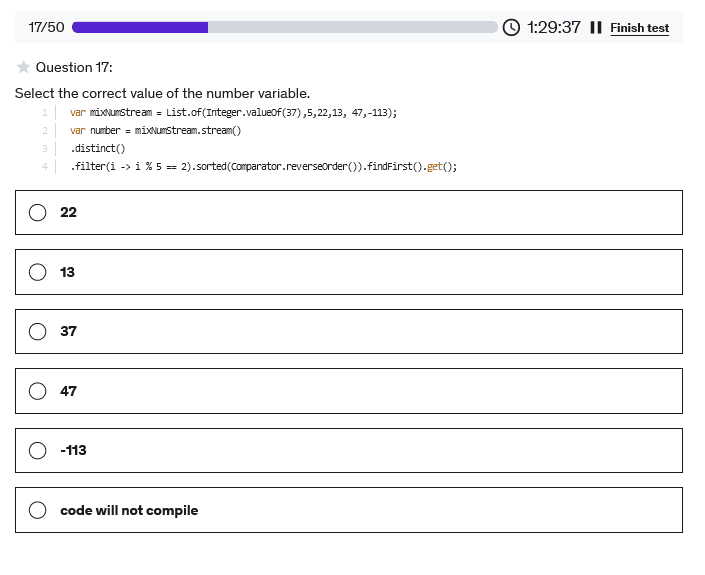
Obtaining an Oracle Java Certification is a significant achievement for any aspiring Java developer. It validates your expertise and skills in Java programming and opens up a world of career opportunities. However, preparing for the certification exam can be challenging, as it requires a deep understanding of Java concepts and practical experience. One effective way to prepare for the exam is by practicing with a variety of exam questions.
In this article, we have compiled a list of Oracle Java certification exam questions to help you in your preparation. These questions cover a wide range of topics, including Java syntax, object-oriented programming, exception handling, multithreading, and more. By practicing these questions, you will not only enhance your knowledge but also become familiar with the exam format and the types of questions you may encounter.
Remember, the key to success in the Oracle Java certification exam is not just memorizing answers but understanding the concepts behind them. Use these questions as a supplement to your study materials and make sure to thoroughly understand the explanations for each question.
See These Oracle Java Certification Exam Questions
- What is the difference between the “==” operator and the “equals()” method in Java?
- Explain the concept of method overloading in Java.
- What are the access modifiers in Java and what do they signify?
- What is the purpose of the “static” keyword in Java?
- What is the difference between checked and unchecked exceptions?
- Explain the concept of inheritance in Java.
- What is the role of the “synchronized” keyword in multithreading?
- What is the purpose of the “final” keyword in Java?
- What is the difference between an abstract class and an interface?
- What are the advantages of using a StringBuilder over a StringBuffer?
- Explain the concept of polymorphism in Java.
- What is the purpose of the “transient” keyword in Java?
- How can you handle exceptions in Java?
- What is the purpose of the “volatile” keyword in Java?
- What is the difference between method overriding and method overloading?
- What is the role of the “this” keyword in Java?
- What is the purpose of the “try-catch-finally” block in Java?
- Explain the concept of anonymous inner classes in Java.
- What is the purpose of the “super” keyword in Java?
- What is the difference between a HashSet and a TreeSet?
- Explain the concept of encapsulation in Java.
- What is the purpose of the “instanceof” operator in Java?
- What is the difference between a stack and a queue?
- Explain the concept of method overriding in Java.
- What is the purpose of the “new” keyword in Java?
- What are the different types of loops available in Java?
- What is the purpose of the “throw” keyword in Java?
- What is the difference between a constructor and a method?
- Explain the concept of generics in Java.
- What is the purpose of the “break” statement in Java?
- What is the difference between a HashMap and a Hashtable?
- Explain the concept of recursion in Java.
- What is the purpose of the “continue” statement in Java?
- What is the difference between pass-by-value and pass-by-reference in Java?
- Explain the concept of autoboxing and unboxing in Java.
- What is the purpose of the “default” keyword in Java?
- What is the difference between a linked list and an array?
- Explain the concept of interfaces in Java.
- What is the purpose of the “finally” block in Java?
- What is the role of the “assert” keyword in Java?
- What is the difference between a static method and an instance method?
- Explain the concept of anonymous classes in Java.
- What is the purpose of the “import” statement in Java?
- What is the difference between a stack and a heap?
These are just a few examples of the Oracle Java certification exam questions you may encounter. Make sure to practice with a variety of questions and thoroughly understand the concepts behind them. Good luck with your certification journey!






