
Completing a thesis or dissertation is a significant accomplishment. However, the journey doesn’t end there. The final step in this academic odyssey is the oral defense, where you present and defend your research in front of a panel of experts. The oral defense questions can be nerve-wracking, but with adequate preparation, you can confidently answer them and showcase your expertise. In this article, we will explore some common oral defense questions and provide you with a comprehensive list to help you prepare.
The purpose of the oral defense is to test your understanding of the research, evaluate your critical thinking skills, and assess your ability to communicate effectively. The panel will pose questions related to your thesis or dissertation, and your answers will determine the success of your defense. It’s crucial to anticipate potential questions and rehearse your responses beforehand to ensure a smooth defense.
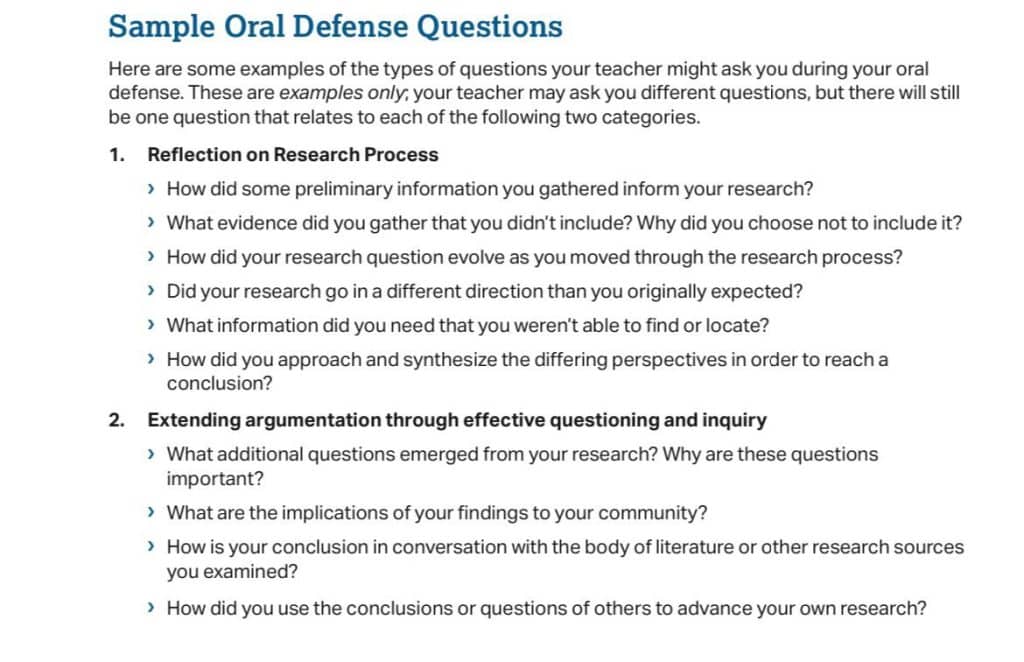
Now, let’s delve into some frequently asked oral defense questions to give you an idea of what to expect and how to approach them:
See these oral defense questions
- What motivated you to choose this research topic?
- What are the main objectives of your study?
- How does your research contribute to the existing literature?
- What methodology did you employ in your research?
- What challenges did you face during the data collection process?
- What are the limitations of your study?
- What are the potential implications of your findings?
- How does your research align with previous theories or studies?
- What are the ethical considerations of your research?
- How did you ensure the validity and reliability of your results?
- How would you address any contradictory evidence to your findings?
- What recommendations do you have for future research in this area?
- What are the practical applications of your research?
- What are the key strengths of your study?
- What theoretical frameworks did you utilize in your research?
- How did you handle any unexpected results?
- What statistical analysis methods did you employ?
- How did you ensure the generalizability of your findings?
- What are the potential limitations of your chosen research design?
- How did you address any biases in your research?
- What alternative approaches could have been taken in your study?
- What were the main findings of your research?
- How did you select your sample population?
- What are the key assumptions of your study?
- What are the practical implications of your research for the industry?
- What are the policy implications of your research?
- How did you ensure the privacy and confidentiality of your participants?
- What are the potential limitations of your data analysis methods?
- How did you address any threats to the internal validity of your study?
- What are the key recommendations arising from your research?
- How would you respond to criticisms of your research?
- What are the implications of your findings for future research?
- How did you mitigate any potential biases in your research?
- What are the implications of your research for the field of study?
- How did you ensure the reliability of your instruments?
- What are the potential limitations of your conceptual framework?
- How did you analyze and interpret your qualitative data?
- What are the practical implications of your research for policymakers?
- How did you ensure the trustworthiness of your qualitative findings?
- What are the potential limitations of your quantitative research design?
- How did you handle any missing data in your analysis?
- What are the key contributions of your research to the field?
- How did you establish the validity of your survey questionnaire?
- What are the potential limitations of your study’s external validity?
Remember, these are just a few examples of oral defense questions that you might encounter. It’s essential to thoroughly understand your research and be prepared to articulate your findings, methodologies, and limitations. Practice answering these questions with confidence, and you’ll be well on your way to acing your oral defense and earning your well-deserved academic recognition.






