
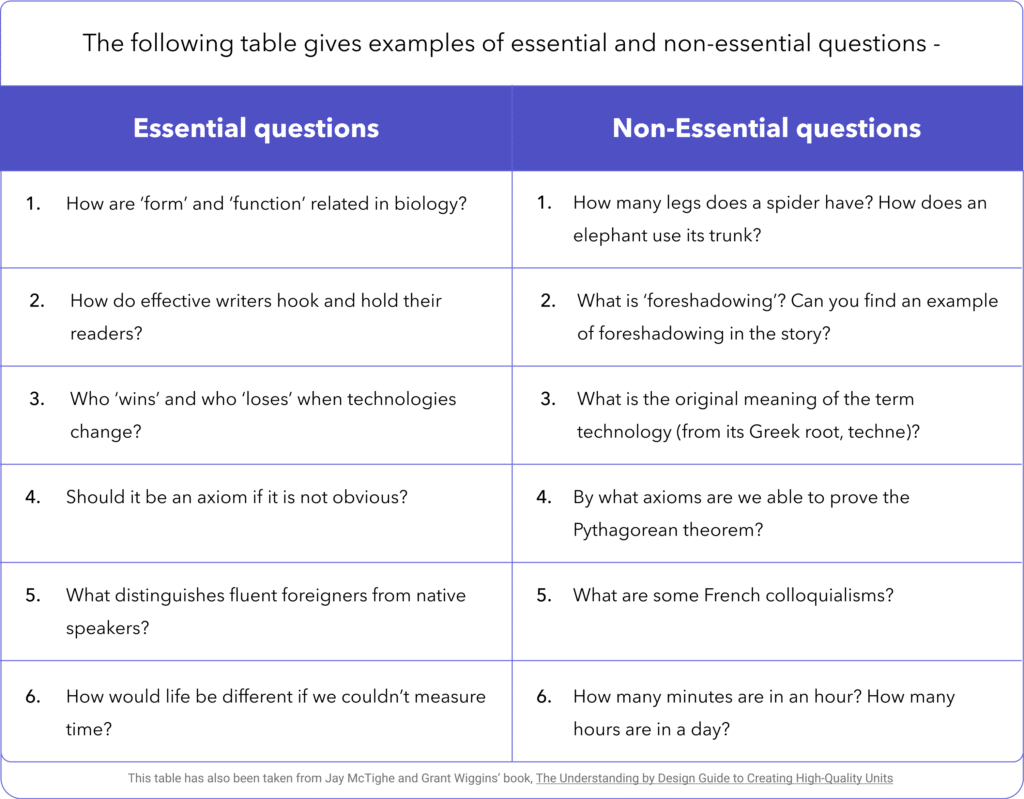
When it comes to education, asking the right questions is crucial. Overarching essential questions are the backbone of a well-rounded curriculum, as they encourage critical thinking, curiosity, and a deeper understanding of the subject matter. These questions are designed to engage students in meaningful discussions and prompt them to explore complex concepts from multiple perspectives.
By focusing on overarching essential questions, educators can foster a love for learning and help students develop important skills such as problem-solving, analysis, and communication. These questions serve as a guide throughout the learning process, encouraging students to dig deeper, challenge assumptions, and make connections between different ideas and concepts.
Whether you are an educator looking for inspiration or a student searching for a starting point, exploring a list of overarching essential questions can be a valuable resource. These questions can spark curiosity, ignite discussions, and provide a framework for exploring various subjects. Below, you will find a comprehensive list of overarching essential questions that cover a wide range of topics and disciplines.
See these Overarching Essential Questions
- How does history shape the present?
- What is the role of ethics in decision-making?
- How does literature reflect society?
- What are the ethical implications of scientific advancements?
- What is the relationship between power and responsibility?
- What factors contribute to economic inequality?
- How does culture influence identity?
- What impact does technology have on society?
- How does geography shape human behavior?
- What are the long-term effects of climate change?
- What are the ethical implications of genetic engineering?
- How does art challenge societal norms?
- What are the causes and consequences of war?
- How does language shape our understanding of the world?
- What is the role of government in ensuring social justice?
- How does religion influence politics?
- What are the effects of globalization on local cultures?
- What is the relationship between nature and nurture?
- What are the ethical considerations in the use of artificial intelligence?
- How does media shape public opinion?
- What is the role of education in promoting equality?
- What is the impact of colonization on indigenous cultures?
- How does music influence emotions?
- What are the ethical implications of animal testing?
- What role does gender play in society?
- How does identity shape our worldview?
- What are the causes and solutions to poverty?
- How does propaganda influence public perception?
- What is the role of empathy in building relationships?
- How does technology impact privacy?
- What are the consequences of income inequality?
- How does literature help us understand the human experience?
- What is the relationship between power and corruption?
- What are the impacts of urbanization on the environment?
- How does culture shape our understanding of beauty?
- What is the role of media in shaping body image?
- What are the ethical considerations in the use of big data?
- How does education impact social mobility?
- What is the role of forgiveness in healing?
- How does religion shape moral values?
- What are the long-term effects of colonization?
- How does technology impact mental health?
These questions are just a starting point. The beauty of overarching essential questions lies in their ability to inspire curiosity and spark meaningful conversations. By encouraging students to explore these questions, educators can create a dynamic learning environment that fosters critical thinking, empathy, and a lifelong love for learning.






