
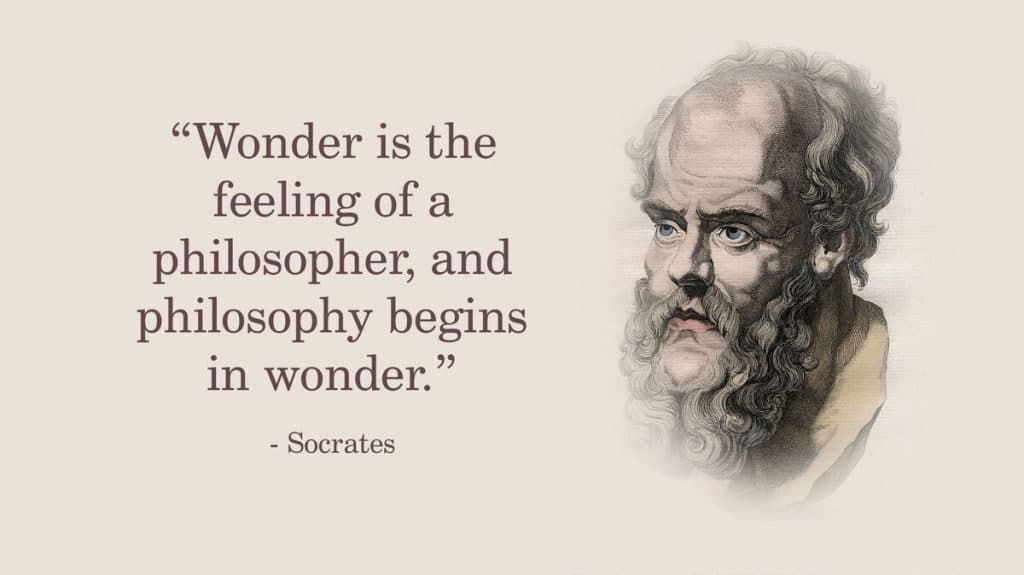
Phaedo, a dialogue written by the ancient Greek philosopher Plato, explores the topic of the immortality of the soul. It recounts the final moments of Socrates, the great philosopher, as he awaits his execution. This philosophical work is filled with profound insights and thought-provoking quotes that continue to resonate with readers to this day. In this article, we will delve into some of the most captivating Phaedo quotes that offer deep introspection into the nature of life, death, and the soul.
“The hour of departure has arrived, and we go our ways—I to die, and you to live. Which is the better, only God knows.” – Socrates
“The soul of the philosopher alone is compelled to contemplate actual Being.” – Plato
“In itself, knowledge is always a beautiful and magnificent thing.” – Socrates
Read these Phaedo quotes:
“The soul takes nothing with her to the next world but her education and her culture; and these, it is said, are of the greatest help or of the greatest harm to the dead man at the very beginning of his journey there.”
“They are in the right, for all philosophers are always courageous; and besides, philosophy is especially concerned with courage.”
“The soul of the philosopher alone is compelled to contemplate actual Being; she is compelled to behold it, and she is compelled to be in the company of it, when separated from the body as far as possible.”
“Is it not the same with the soul, that she has been proved to be immortal, and to have been born again and again, and to be indestructible, and to be of such a nature as never to perish?”
“Why, even the ordinary run of men, if they have but a taste of that kind of food which is called wisdom, are straightway filled with wonders and delight, and become gentle and manageable.”
“When someone sees a corpse, he is not to regard the corpse as the man he loved, but as the remains of what he loved.”
“It is necessary, then, for the soul to know herself first, if she is to know anything else; for she is never deceived in such matters.”
“For if someone, when he saw a lyre and found fault with it, were to say, ‘Why, what a wretched lyre this is, to have so few strings or to be so discordant, or to be so out of tune!’ we should reply, ‘You are quite right in finding fault with the lyre for such reasons; but the man who finds fault with it for not being a living creature, or for not having a voice, or for not having been made by a better workman, is not using his wits.”
“And if she is compelled to contemplate existence, she will contemplate it not in the world of sense, but in that of thought; and therefore she will be in herself.” – Plato
“And this is the reason why the true lover of knowledge is always striving after being—he desires to be, and to be honored by being, among the truly existing things.”
“And our whole business in the study of philosophy is to draw the soul towards being.”
“For the impure are not permitted to approach the pure.”
“And he who is not a lover of wisdom, but a lover of strife, will be led by his beloved into many things that are not wise, instead of wisdom.”
“For as the soul is immortal, has been born often, and has seen all things here and in the underworld, there is nothing which it has not learned.”
“The soul, then, as being immortal, and having been born again many times, and having seen all things that exist, whether in this world or in the world below, has knowledge of them all.”
“For nothing else can be the food for the soul, which is akin to the divine, except that which is akin to the divine.”
“And the philosopher, who is the lover of truth, can never willingly tolerate falsehood, which is the opposite of truth.”
“Those who are not beautiful in mind, and who have no part in the beautiful itself, are incapable of following it up in a right and orderly manner; nor can anyone act rationally without seeing the beautiful and the good.”
“The soul, then, as being immortal, and having been born again many times, and having seen all things that exist, whether in this world or in the world below, has knowledge of them all.”
“The soul, which is divine, has a good and evil which are in the same class as itself; and the good is akin to wisdom and the evil to ignorance, and in the same way as the soul is immortal, the good and evil will follow the soul in its successive births.”
These captivating Phaedo quotes offer a glimpse into the profound philosophical ideas presented in Plato’s dialogue. Each quote invites us to contemplate the nature of our existence, the immortality of the soul, and the pursuit of wisdom. As we ponder these timeless words, we are reminded of the enduring relevance and power of ancient philosophy in shaping our understanding of life and the human experience.






