
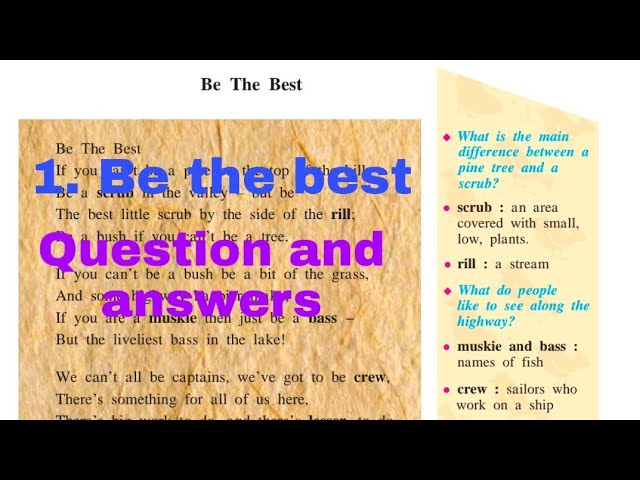
When reading a poem, it is natural to have questions. Poetry is often filled with metaphors, symbols, and abstract ideas that can leave readers pondering the deeper meaning. Poem questions can help us explore these complexities and gain a deeper understanding of the poet’s message. In this article, we will delve into the world of poem questions, providing a list of thought-provoking inquiries to enhance your poetic journey.
Poetry, with its concise and imaginative language, has the power to evoke emotions and challenge our perspectives. It encourages us to delve deeper into its verses and unravel its hidden meanings. Poem questions can spark conversations, allowing readers to share their interpretations and gain different insights. They can also inspire writers to explore new themes and experiment with their own poetic creations.
Whether you are a poetry enthusiast, a student studying literature, or simply curious about the power of words, poem questions are a valuable tool. They can guide you through a poem’s imagery, symbols, and themes, helping you unravel its layers and appreciate its artistry. So, let’s explore some intriguing poem questions that will ignite your curiosity and open doors to new poetic experiences!
See these poem questions
- What emotions does the poet convey in this poem?
- What is the central theme of the poem?
- How does the poet use metaphors to enhance the meaning?
- What is the significance of the poem’s title?
- How does the poem make you feel?
- What imagery does the poet employ and why?
- What is the tone of the poem?
- What message or lesson can be derived from the poem?
- What is the poet’s intention behind writing this poem?
- How does the poem relate to the poet’s personal experiences?
- What symbols are present in the poem and what do they represent?
- What is the rhyme scheme of the poem?
- What literary devices are used in the poem?
- What is the historical or cultural context of the poem?
- What is the significance of the ending lines?
- How does the structure of the poem contribute to its meaning?
- What is the relationship between the speaker and the subject of the poem?
- What social or political issues does the poem address?
- What is the overall mood of the poem?
- What is the poet’s commentary on human nature?
- What does the poem teach us about the power of language?
- What philosophical questions does the poem raise?
- How does the poem challenge traditional poetic conventions?
- What is the significance of repetition in the poem?
- What is the poet’s perspective on love?
- How does the poem explore the concept of time?
- What is the role of nature in the poem?
- What is the relationship between the poem’s form and content?
- What social or cultural issues does the poem critique?
- What is the significance of the opening lines?
- How does the poet use sound devices to enhance the poem?
- What is the poet’s commentary on society?
- What does the poem suggest about the human condition?
- What is the underlying metaphor in the poem?
- How does the poem challenge our preconceived notions?
- What is the poet’s attitude towards mortality?
- What is the role of memory in the poem?
- What do you think the poet is trying to convey through the use of ambiguity?
- How does the poem explore the concept of identity?
- What historical events or figures are referenced in the poem?
- What is the poet’s commentary on art?
- What is the role of irony in the poem?
- What does the poem suggest about the power dynamics between individuals?
- How does the poem challenge societal norms?
These poem questions are a starting point for your poetic exploration. Remember, there are no right or wrong answers when it comes to interpreting poetry. Each reader brings their own experiences and perspectives, which shape their understanding of a poem. So, embrace the beauty of uncertainty, and let poem questions guide you on a journey of discovery and self-reflection.






