
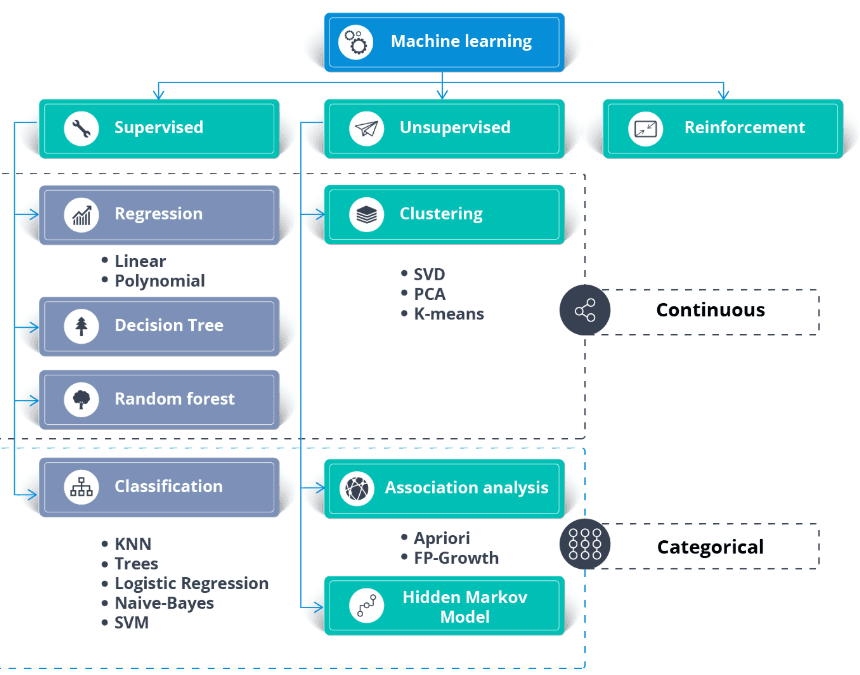
Predictive modeling has become an essential tool for businesses in today’s data-driven world. It involves using statistical algorithms and machine learning techniques to analyze historical data and make predictions about future outcomes. As companies increasingly rely on predictive modeling to gain insights and make informed decisions, the demand for skilled predictive modelers has skyrocketed.
For candidates looking to land a job in predictive modeling, it is crucial to be well-prepared for the interview process. Employers often ask a range of technical questions to assess a candidate’s knowledge and expertise in the field. To help you succeed in your next predictive modeling interview, we have compiled a comprehensive list of questions that you may encounter.
Whether you are a seasoned professional or just starting your career in predictive modeling, these questions will test your understanding of key concepts and techniques. By familiarizing yourself with these interview questions, you can confidently showcase your skills and increase your chances of landing your dream job in predictive modeling.
See these predictive modeling interview questions
- What is predictive modeling and how does it differ from other modeling techniques?
- Explain the steps involved in the predictive modeling process.
- What are the different types of predictive modeling techniques?
- What is cross-validation and why is it important in predictive modeling?
- How do you handle missing data in predictive modeling?
- What is the curse of dimensionality and how does it affect predictive modeling?
- Explain the concept of overfitting in predictive modeling.
- What is regularization and why is it used in predictive modeling?
- What evaluation metrics do you use to assess the performance of a predictive model?
- What is the difference between classification and regression in predictive modeling?
- How do decision trees work in predictive modeling?
- What are ensemble methods in predictive modeling and why are they effective?
- Explain the concept of feature selection in predictive modeling.
- What is the bias-variance tradeoff in predictive modeling?
- How do you handle imbalanced datasets in predictive modeling?
- What techniques do you use to prevent overfitting in predictive modeling?
- What is the purpose of feature scaling in predictive modeling?
- How do you handle multicollinearity in predictive modeling?
- What is the difference between bagging and boosting in predictive modeling?
- What are the assumptions of linear regression in predictive modeling?
- Explain how logistic regression is used in predictive modeling.
- What is the purpose of regularization in logistic regression?
- How do you interpret the coefficients in logistic regression?
- What is the ROC curve and why is it used in predictive modeling?
- Explain the concept of support vector machines (SVM) in predictive modeling.
- What are the advantages and disadvantages of using SVM in predictive modeling?
- How does k-nearest neighbors (KNN) algorithm work in predictive modeling?
- What is the difference between unsupervised and supervised learning in predictive modeling?
- Explain the concept of clustering in predictive modeling.
- What is the purpose of dimensionality reduction in predictive modeling?
- How do you handle outliers in predictive modeling?
- What are the different types of neural networks used in predictive modeling?
- Explain the concept of backpropagation in neural networks.
- What are the advantages and disadvantages of using neural networks in predictive modeling?
- How does random forest algorithm work in predictive modeling?
- What is the purpose of feature importance in random forest?
- What are the assumptions of linear discriminant analysis (LDA) in predictive modeling?
- Explain the concept of gradient boosting in predictive modeling.
- What is the difference between batch and online learning in predictive modeling?
- How do you handle categorical variables in predictive modeling?
- Explain the concept of time series analysis in predictive modeling.
- What are the different methods for handling imbalanced datasets in predictive modeling?
- How do you handle outliers in time series analysis?
- What are the limitations of predictive modeling?
By preparing answers to these questions and demonstrating your knowledge and expertise in predictive modeling, you will greatly increase your chances of success in your next interview. Good luck!






