
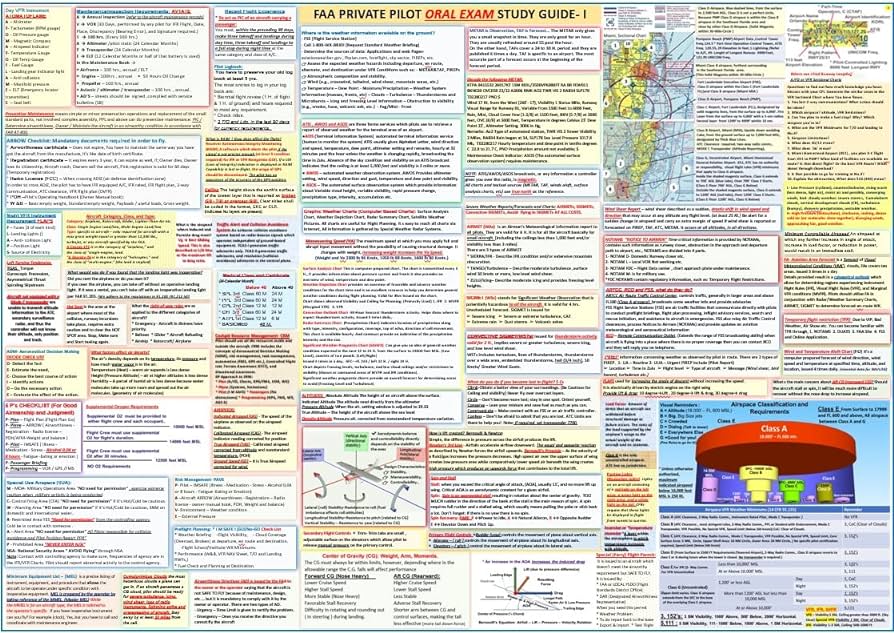
Obtaining a private pilot license is a significant achievement that requires dedication, knowledge, and practical skills. One crucial aspect of the licensing process is the oral examination. During this examination, aspiring pilots are tested on their understanding of various aviation topics, regulations, and procedures. It is essential to be well-prepared for this examination to demonstrate competence and ensure a successful outcome. In this article, we will explore some common private pilot oral questions to help you in your preparation.
During the private pilot oral examination, the examiner will assess your knowledge in different areas, such as aerodynamics, aircraft systems, weather, navigation, regulations, and emergency procedures. The questions can cover a wide range of topics, from the principles of flight to airspace classifications. It is crucial to study these topics thoroughly and be able to answer questions confidently and accurately.
To assist you in your preparation, below are some private pilot oral questions that you may encounter during your examination:
See these private pilot oral questions
- What is the purpose of the rudder on an aircraft?
- Explain the concept of angle of attack.
- What is the difference between true airspeed and indicated airspeed?
- Describe the effects of high density altitude on aircraft performance.
- What is the significance of the V-speeds?
- What is a VOR and how does it work?
- Explain the different types of airspace classifications in the United States.
- What are the requirements for a private pilot to fly at night?
- What is the purpose of a pre-flight inspection?
- Describe the primary flight controls and their functions.
- What are the qualifications for a private pilot to act as pilot-in-command?
- Explain the purpose of the National Airspace System (NAS).
- What are the minimum fuel requirements for a private pilot?
- Describe the effects of weight and balance on aircraft performance.
- What are the standard traffic patterns and their entry procedures?
- Explain the concept of hypoxia and its symptoms.
- What are the different types of weather briefings available to pilots?
- Describe the purpose and function of the altimeter.
- What is the purpose of the Aeronautical Information Manual (AIM)?
- Explain the procedures for entering and exiting a Class C airspace.
- What are the primary flight instruments and their indications?
- Describe the steps to recover from a stall.
- What are the different types of airspeed and their definitions?
- Explain the requirements for a private pilot to carry passengers.
- What is the purpose of an aircraft’s pitot-static system?
- Describe the effects of icing on an aircraft.
- What are the procedures for operating in a special use airspace?
- Explain the concept of density altitude and its effects on aircraft performance.
- What are the requirements for a private pilot to fly in controlled airspace?
- Describe the steps to recover from a spiral dive.
- What is the purpose of the Aircraft Communications Addressing and Reporting System (ACARS)?
- Explain the procedures for operating in Class G airspace.
- What are the different types of airspaces and their dimensions?
- Describe the effects of wind on aircraft performance.
- What is the purpose of the transponder in an aircraft?
- Explain the concept of minimum controllable airspeed.
- What are the procedures for operating in a Temporary Flight Restriction (TFR) area?
- Describe the effects of high altitude on aircraft performance.
- What is the purpose of the Automatic Dependent Surveillance-Broadcast (ADS-B) system?
- Explain the procedures for operating in Class D airspace.
- What are the different types of cloud formations and their characteristics?
- Describe the effects of carburetor ice on aircraft performance.
- What is the purpose of the FAA’s Pilot’s Handbook of Aeronautical Knowledge?
- Explain the procedures for operating in a Military Operations Area (MOA).
- What are the requirements for a private pilot to fly in instrument meteorological conditions (IMC)?
These questions are just a sample of what you may encounter during your private pilot oral examination. It is crucial to thoroughly study and understand the relevant aviation topics, regulations, and procedures to confidently answer any questions that may come your way. Good luck with your examination and enjoy your journey to becoming a private pilot!






