
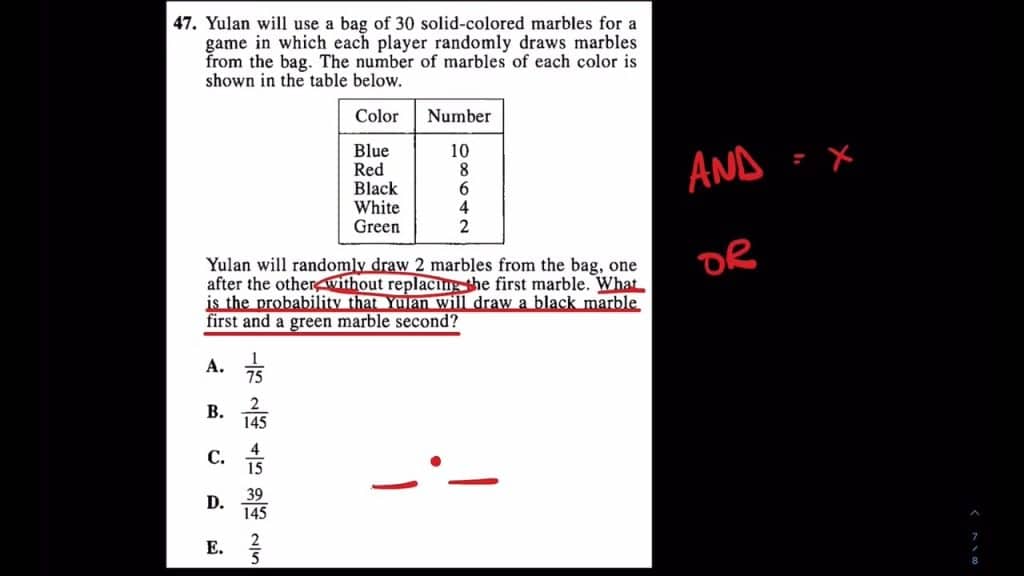
When preparing for the SAT exam, it is important to have a solid understanding of probability concepts. The SAT often includes questions that test your ability to calculate probabilities and make informed decisions based on them. By familiarizing yourself with different types of probability questions, you can improve your chances of performing well on this section of the exam.
In this article, we will explore a variety of probability SAT questions that you may encounter on the test. These questions will cover different aspects of probability, including basic probability calculations, conditional probability, and probability distributions. By practicing these questions, you can enhance your problem-solving skills and boost your confidence for the SAT exam.
Remember, the key to success in probability questions is to understand the underlying concepts and apply them correctly. Practice solving different types of probability questions to improve your skills and ensure that you are well-prepared for the SAT exam.
See these probability SAT questions:
- What is the probability of rolling a 6 on a fair six-sided die?
- If two cards are drawn from a standard deck of 52 cards without replacement, what is the probability that both cards are spades?
- A bag contains 5 red marbles, 3 blue marbles, and 2 green marbles. If one marble is drawn at random, what is the probability that it is blue?
- Given that a family has two children, what is the probability that both children are boys?
- A box contains 10 red balls and 5 blue balls. If two balls are drawn at random without replacement, what is the probability that both balls are red?
- If a fair coin is flipped three times, what is the probability of getting at least two heads?
- A jar contains 8 red candies, 5 green candies, and 7 blue candies. If one candy is randomly chosen, what is the probability that it is either red or blue?
- If a card is drawn from a standard deck of 52 cards, what is the probability of drawing a face card or a spade?
- In a group of 30 students, 15 are female and 10 are left-handed. If one student is chosen at random, what is the probability that the student is both female and left-handed?
- If two dice are rolled, what is the probability that the sum of the numbers rolled is 7?
- A bag contains 4 red marbles, 3 green marbles, and 5 blue marbles. If two marbles are drawn at random without replacement, what is the probability that both marbles are blue?
- If a fair coin is flipped four times, what is the probability of getting exactly three tails?
- A box contains 6 red balls and 4 blue balls. If two balls are drawn at random without replacement, what is the probability that the first ball is red and the second ball is blue?
- If a card is drawn from a standard deck of 52 cards, what is the probability of drawing a heart or a black card?
- In a group of 40 students, 20 are female and 10 are left-handed. If one student is chosen at random, what is the probability that the student is either female or left-handed?
- If two dice are rolled, what is the probability that the sum of the numbers rolled is less than 4?
- A bag contains 7 red marbles, 4 green marbles, and 3 blue marbles. If two marbles are drawn at random without replacement, what is the probability that the first marble is red and the second marble is blue?
- If a fair coin is flipped five times, what is the probability of getting at least four heads?
- A box contains 8 red balls and 6 blue balls. If two balls are drawn at random without replacement, what is the probability that both balls are red or both balls are blue?
- If a card is drawn from a standard deck of 52 cards, what is the probability of drawing a diamond or a face card?
- In a group of 50 students, 25 are female and 15 are left-handed. If one student is chosen at random, what is the probability that the student is neither female nor left-handed?
- If two dice are rolled, what is the probability that the sum of the numbers rolled is greater than 9?
- A bag contains 9 red marbles, 5 green marbles, and 6 blue marbles. If two marbles are drawn at random without replacement, what is the probability that neither marble is red?
- If a fair coin is flipped six times, what is the probability of getting exactly five tails?
- A box contains 10 red balls and 8 blue balls. If two balls are drawn at random without replacement, what is the probability that at least one ball is red and at least one ball is blue?
- If a card is drawn from a standard deck of 52 cards, what is the probability of drawing a spade or a numbered card?
- In a group of 60 students, 30 are female and 20 are left-handed. If one student is chosen at random, what is the probability that the student is both female and left-handed?
- If two dice are rolled, what is the probability that the sum of the numbers rolled is an even number?
- A bag contains 12 red marbles, 6 green marbles, and 4 blue marbles. If two marbles are drawn at random without replacement, what is the probability that both marbles are green?
- If a fair coin is flipped seven times, what is the probability of getting at most two tails?
- A box contains 12 red balls and 9 blue balls. If two balls are drawn at random without replacement, what is the probability that the first ball is red or the second ball is blue?
- If a card is drawn from a standard deck of 52 cards, what is the probability of drawing a heart or a face card?
- In a group of 70 students, 35 are female and 25 are left-handed. If one student is chosen at random, what is the probability that the student is either female or left-handed?
- If two dice are rolled, what is the probability that the sum of the numbers rolled is a multiple of 3?
- A bag contains 15 red marbles, 7 green marbles, and 5 blue marbles. If two marbles are drawn at random without replacement, what is the probability that the first marble is red or the second marble is blue?
- If a fair coin is flipped eight times, what is the probability of getting exactly six tails?
- A box contains 14 red balls and 10 blue balls. If two balls are drawn at random without replacement, what is the probability that both balls are red and the second ball is blue?
- If a card is drawn from a standard deck of 52 cards, what is the probability of drawing a diamond or a black card?
- In a group of 80 students, 40 are female and 30 are left-handed. If one student is chosen at random, what is the probability that the student is neither female nor left-handed?
- If two dice are rolled, what is the probability that the sum of the numbers rolled is less than 6?
- A bag contains 16 red marbles, 8 green marbles, and 6 blue marbles. If two marbles are drawn at random without replacement, what is the probability that neither marble is red?
- If a fair coin is flipped nine times, what is the probability of getting at least seven heads?
- A box contains 16 red balls and 12 blue balls. If two balls are drawn at random without replacement, what is the probability that at least one ball is red and at least one ball is blue?
- If a card is drawn from a standard deck of 52 cards, what is the probability of drawing a spade or a face card?
- In a group of 90 students, 45 are female and 35 are left-handed. If one student is chosen at random, what is the probability that the student is both female and left-handed?
- If two dice are rolled, what is the probability that the sum of the numbers rolled is an odd number?
- A bag contains 18 red marbles, 9 green marbles, and 7 blue marbles. If two marbles are drawn at random without replacement, what is the probability that both marbles are green?
- If a fair coin is flipped ten times, what is the probability of getting at most three tails?
- A box contains 18 red balls and 14 blue balls. If two balls are drawn at random without replacement, what is the probability that the first ball is red or the second ball is blue?
- If a card is drawn from a standard deck of 52 cards, what is the probability of drawing a heart or a numbered card?
- In a group of 100 students, 50 are female and 40 are left-handed. If one student is chosen at random, what is the probability that the student is either female or left-handed?
These probability SAT questions provide a glimpse into the types of problems you may encounter on the exam. Remember to practice solving various probability questions to strengthen your skills and become more comfortable with these concepts. Good luck with your SAT preparation!






