
Python is a popular programming language known for its simplicity and versatility. It provides a wide range of data structures that allow developers to efficiently organize and manipulate data. Understanding these data structures is crucial for acing your Python interviews. In this article, we will explore some common interview questions related to Python data structures.
Preparing for a Python interview can be challenging, especially when it comes to data structures. This article aims to help you build a solid foundation by providing a comprehensive list of interview questions related to Python data structures. By familiarizing yourself with these questions, you will not only enhance your problem-solving skills but also gain confidence in your ability to tackle Python interviews.
Whether you are a beginner or an experienced Python developer, these interview questions will test your knowledge and help you identify areas where you need improvement. It is essential to practice these questions and understand the underlying concepts to succeed in your Python interviews.
See these Python Data Structures Interview Questions
- What is a data structure in Python?
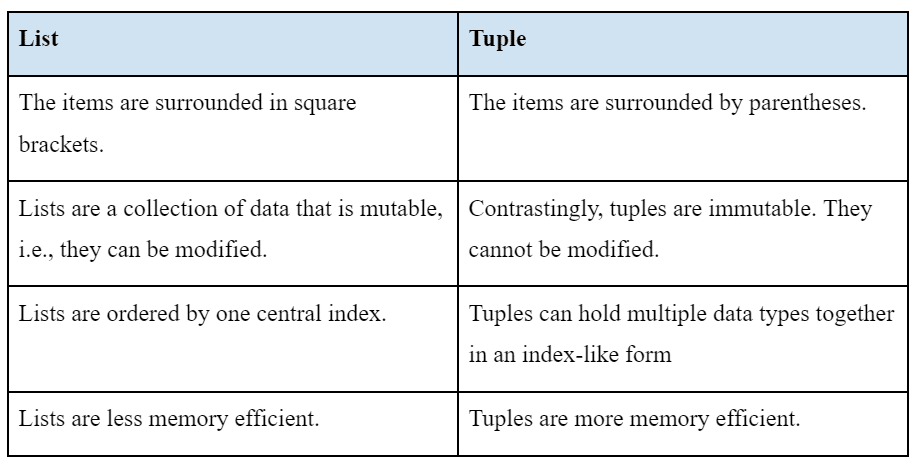
- What is the difference between a list and a tuple?
- Explain the concept of dictionaries in Python.
- What are the key features of sets in Python?
- How do you access the elements of a list in Python?
- What is the difference between append() and extend() methods in Python lists?
- Explain the concept of stacks and queues in Python.
- What are the common operations performed on a stack?
- How do you implement a queue using a list in Python?
- What are the advantages of using a deque over a list in Python?
- What is the time complexity of accessing an element in a dictionary?
- Explain the concept of hash tables in Python.
- What is the difference between a shallow copy and a deep copy?
- How do you remove duplicate elements from a list in Python?
- Explain the concept of generators in Python.
- What is the purpose of the range() function in Python?
- How do you sort a dictionary by value in Python?
- What is the difference between sort() and sorted() functions in Python?
- Explain the concept of linked lists in Python.
- How do you reverse a linked list in Python?
- What is the difference between a singly linked list and a doubly linked list?
- Explain the concept of binary trees in Python.
- What are the different tree traversal methods in Python?
- How do you find the height of a binary tree in Python?
- What is the difference between BFS and DFS algorithms?
- Explain the concept of heaps in Python.
- What are the different types of heaps in Python?
- How do you implement a priority queue in Python using heaps?
- Explain the concept of hash maps in Python.
- What is the difference between a hash map and a hash table?
- How do you handle collisions in hash maps?
- What is the time complexity of searching for an element in a hash map?
- Explain the concept of graphs in Python.
- What are the different graph traversal algorithms in Python?
- How do you detect cycles in a directed graph in Python?
- What is the difference between a directed graph and an undirected graph?
- Explain the concept of tries in Python.
- What are the advantages of using tries for string-related operations?
- How do you insert and search for a word in a trie in Python?
- Explain the concept of arrays in Python.
- What is the time complexity of accessing an element in an array?
- How do you find the maximum and minimum elements in an array in Python?
- What are the different array manipulation techniques in Python?
These are just a few examples of Python data structures interview questions that you may encounter during your interviews. It is essential to continue practicing and exploring different scenarios to strengthen your understanding of Python data structures. Remember, the more you practice, the more confident you will become in your abilities to tackle any interview question that comes your way.






