
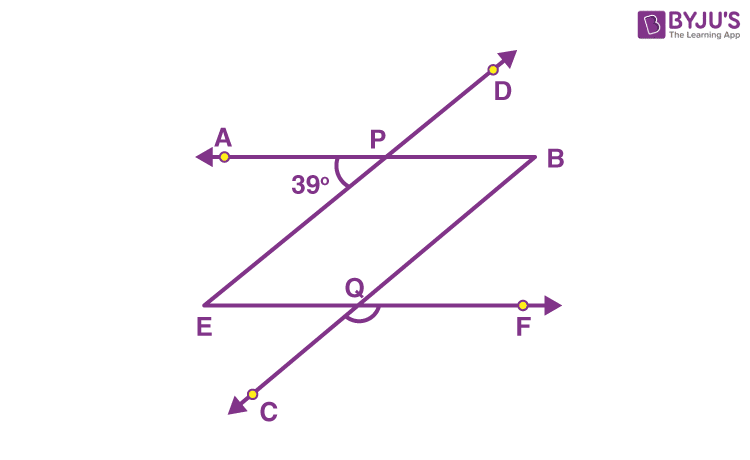
Angles are an essential concept in geometry and mathematics. They are formed when two lines intersect or when two rays originate from a common point. Understanding angles is crucial because they are used in various fields, including engineering, architecture, and physics. However, many students and individuals often have questions about angles and their properties. In this article, we will explore some common questions about angles and provide answers to help clarify any confusion.
One common question that arises is, “What are the different types of angles?” There are several types of angles, including acute angles (less than 90 degrees), right angles (exactly 90 degrees), obtuse angles (between 90 and 180 degrees), and straight angles (exactly 180 degrees). Additionally, angles can be classified as complementary (two angles that add up to 90 degrees), supplementary (two angles that add up to 180 degrees), or vertical (opposite angles formed by intersecting lines).
Another frequently asked question is, “How can angles be measured?” Angles can be measured in degrees using a protractor. A protractor is a tool with a semicircular shape and marked degrees. To measure an angle, place the center of the protractor on the vertex of the angle and align one of its arms with one of the sides of the angle. Then, read the degree measurement where the other side of the angle intersects the protractor scale.
See these questions about angles:
- What is an acute angle?
- What is a right angle?
- What is an obtuse angle?
- What is a straight angle?
- What is a reflex angle?
- What is a complementary angle?
- What is a supplementary angle?
- What is a vertical angle?
- What is an adjacent angle?
- What is an interior angle?
- What is an exterior angle?
- What is the sum of angles in a triangle?
- What is the sum of angles in a quadrilateral?
- What is the sum of angles in a pentagon?
- What is the sum of angles in a hexagon?
- What is the sum of angles in a heptagon?
- What is the sum of angles in an octagon?
- What is the sum of angles in a nonagon?
- What is the sum of angles in a decagon?
- What is the sum of angles in a circle?
- What is the definition of congruent angles?
- What is the definition of adjacent angles?
- What is the definition of vertical angles?
- What are alternate interior angles?
- What are alternate exterior angles?
- What is the difference between interior and exterior angles?
- What is the difference between acute and obtuse angles?
- What is the difference between adjacent and vertical angles?
- What is the difference between complementary and supplementary angles?
- What is the difference between congruent and similar angles?
- How can angles be measured?
- What is a protractor?
- What is the unit of measurement for angles?
- How can angles be added or subtracted?
- What is the angle measurement of a straight line?
- What is the angle measurement of a right angle?
- What is the angle measurement of a triangle?
- What is the angle measurement of a square?
- What is the angle measurement of a rectangle?
- What is the angle measurement of a parallelogram?
- What is the angle measurement of a trapezoid?
- What is the angle measurement of a circle?
- What is the angle measurement of a regular polygon?
These are just a few examples of the many questions that can arise when studying angles. Remember, angles play a significant role in various mathematical and scientific applications, so it is crucial to have a clear understanding of their properties and measurements. By exploring and answering these questions, you can enhance your knowledge and proficiency in working with angles.






