
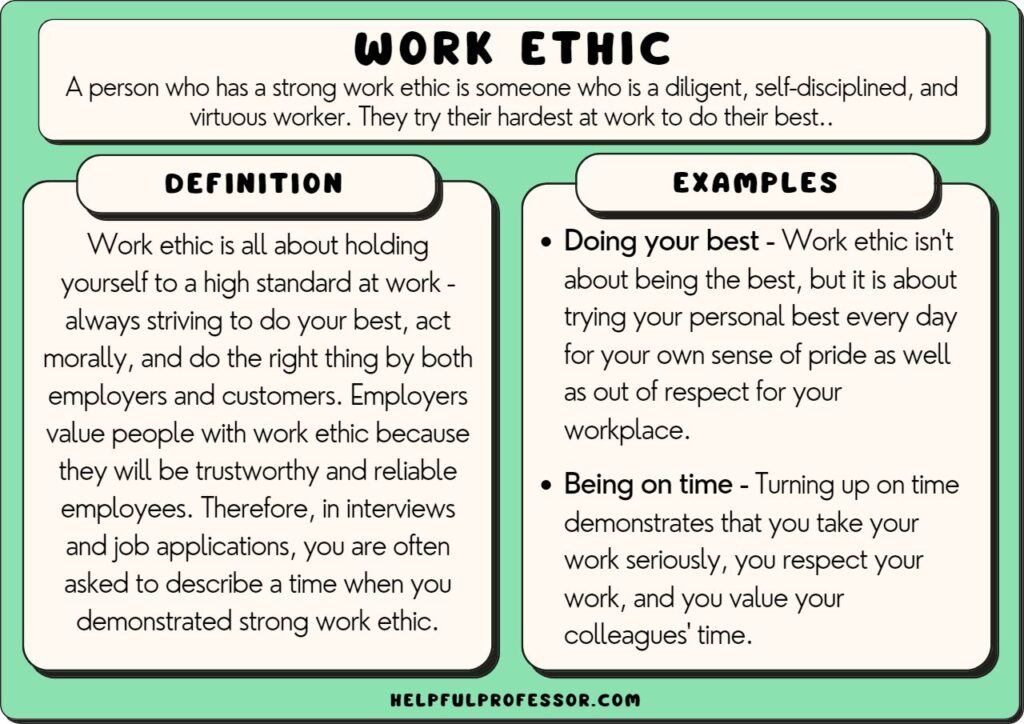
Work ethic is an essential aspect of any professional’s life. It refers to the set of moral principles and values that determine one’s attitude and behavior towards work. A strong work ethic is often associated with dedication, reliability, and a commitment to excellence. However, understanding and developing a strong work ethic can be a complex process. In this article, we will explore some common questions about work ethic and provide insights to help you navigate this important aspect of your professional life.
What exactly is work ethic? How does it differ from motivation? Can work ethic be learned or is it innate? These are some of the questions that often arise when discussing work ethic. By delving into these questions, we can gain a deeper understanding of the concept and its significance in the workplace.
Developing a strong work ethic is crucial for success in any career. It not only impacts your own productivity and job satisfaction but also influences how others perceive you as a professional. By addressing these questions, we aim to help you cultivate a positive work ethic that aligns with your personal values and career goals.
See these questions about work ethic
- 1. What factors contribute to a strong work ethic?
- 2. How does work ethic affect job performance?
- 3. Can work ethic be measured?
- 4. What are some signs of a weak work ethic?
- 5. How can I improve my work ethic?
- 6. Is work ethic influenced by cultural differences?
- 7. What role does work ethic play in teamwork?
- 8. How does work ethic impact career advancement?
- 9. Can work ethic be taught?
- 10. How does work ethic relate to time management?
- 11. What are the consequences of a poor work ethic?
- 12. How can I maintain a positive work ethic during challenging times?
- 13. Is work ethic more important than talent?
- 14. How do different generations perceive work ethic?
- 15. What are some common misconceptions about work ethic?
- 16. How can I align my work ethic with my personal values?
- 17. Can work ethic be influenced by external factors?
- 18. How does work ethic impact job satisfaction?
- 19. What are the benefits of having a strong work ethic?
- 20. How does work ethic affect work-life balance?
- 21. Can work ethic be compromised for personal gain?
- 22. How can I demonstrate my work ethic during a job interview?
- 23. Is work ethic valued differently in different industries?
- 24. How does work ethic affect workplace morale?
- 25. What are the potential consequences of a lack of work ethic?
- 26. How can I help my team members improve their work ethic?
- 27. Can work ethic be influenced by leadership?
- 28. How does work ethic impact professional relationships?
- 29. What are some strategies for maintaining a consistent work ethic?
- 30. How can I balance a strong work ethic with self-care?
- 31. Is work ethic more important than job satisfaction?
- 32. What are some common challenges in developing a strong work ethic?
- 33. How does work ethic affect employee engagement?
- 34. Can work ethic be influenced by organizational culture?
- 35. How does work ethic impact job security?
- 36. What are the potential consequences of a toxic work ethic?
- 37. How can I address work ethic issues in the workplace?
- 38. Is work ethic a subjective or objective measure?
- 39. How does work ethic impact professional reputation?
- 40. Can work ethic be influenced by personal values?
By exploring these questions about work ethic, you can gain valuable insights into this important aspect of your professional life. Remember, a strong work ethic can set you apart from your peers and contribute to your long-term success. Continuously evaluating and improving your work ethic is a worthwhile endeavor that can lead to personal and professional growth.






