
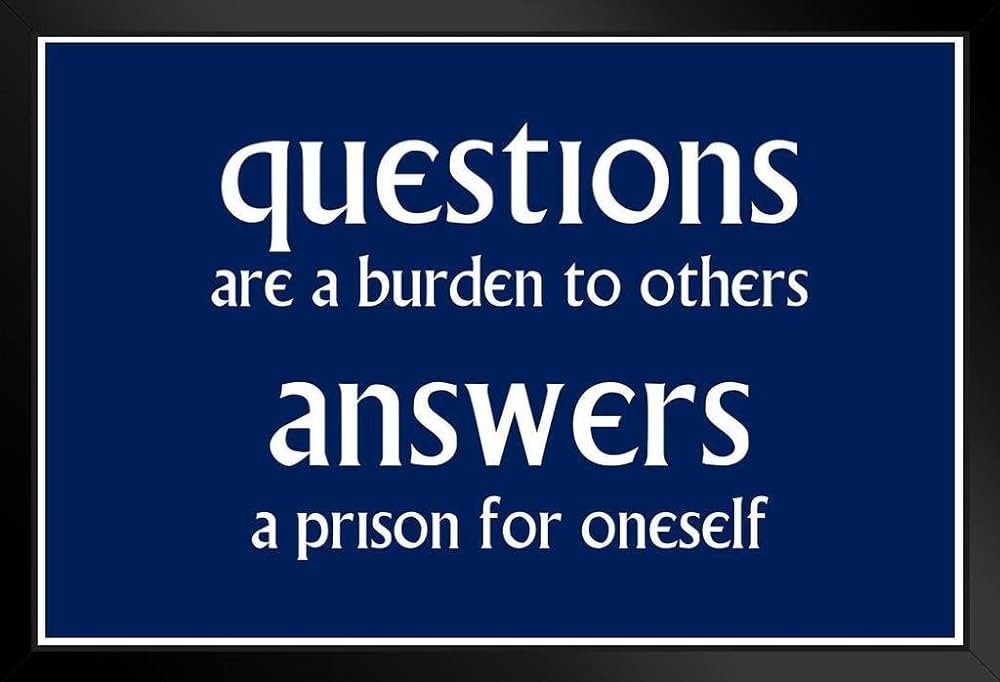
As human beings, we naturally have a curious nature and a desire to seek knowledge. Asking questions is an essential part of our learning process and helps us gain a deeper understanding of the world around us. However, there are instances where questions can become a burden to others, leading to frustration and a breakdown in communication. This article aims to explore the reasons why questions can be burdensome and how we can navigate this delicate balance.
When we ask questions, we often expect immediate answers or solutions. In our fast-paced society, time is of the essence, and we want instant gratification. However, this can put pressure on the person being asked, especially if they do not have the knowledge or expertise to provide a satisfactory response. Additionally, constantly bombarding someone with questions can disrupt their workflow or train of thought, hindering their productivity and causing unnecessary stress.
Another reason why questions can be burdensome is when they are repetitive or already answered. It can be frustrating for individuals to repeatedly answer the same questions, especially if the information is readily available or has been previously discussed. This not only wastes time but also shows a lack of consideration for the other person’s efforts to provide the necessary information.
See, these questions are a burden to others
- What is the meaning of life?
- Who is responsible for global warming?
- How can I become a millionaire overnight?
- Why do bad things happen to good people?
- When will world peace be achieved?
- Where is the fountain of youth located?
- Why do we need to sleep?
- What is the purpose of art?
- Who created the universe?
- How can I find true love?
- Why do we dream?
- When will poverty be eradicated?
- Where do lost socks go?
- Why do we have different time zones?
- What is the cure for cancer?
- Who invented the internet?
- How can I achieve eternal happiness?
- Why do we age?
- When will humans colonize Mars?
- Where do thoughts come from?
- Why do we need to eat vegetables?
- What is the key to success?
- Who is the most influential person in history?
- How can I live forever?
- Why do people have phobias?
- When will we find a cure for all diseases?
- Where is the lost city of Atlantis?
- Why do humans have emotions?
- What is the secret to happiness?
- Who is the greatest athlete of all time?
- How can I travel back in time?
- Why do we need to exercise?
- When will we achieve gender equality?
- Where does the universe end?
- Why do we have different languages?
- What is the meaning of love?
- Who is the smartest person in the world?
- How can I become a genius?
- Why do we feel pain?
- When will poverty be eradicated?
- Where do lost socks go?
- Why do we have different time zones?
- What is the cure for cancer?
- Who invented the internet?
- How can I achieve eternal happiness?
In conclusion, while questions are a valuable tool for learning and growth, we must be mindful of their impact on others. By considering the relevance, timing, and frequency of our inquiries, we can ensure that our questions do not become burdensome. Let’s foster a culture of respectful and considerate communication, where questions are welcomed but not at the expense of others’ well-being.






