
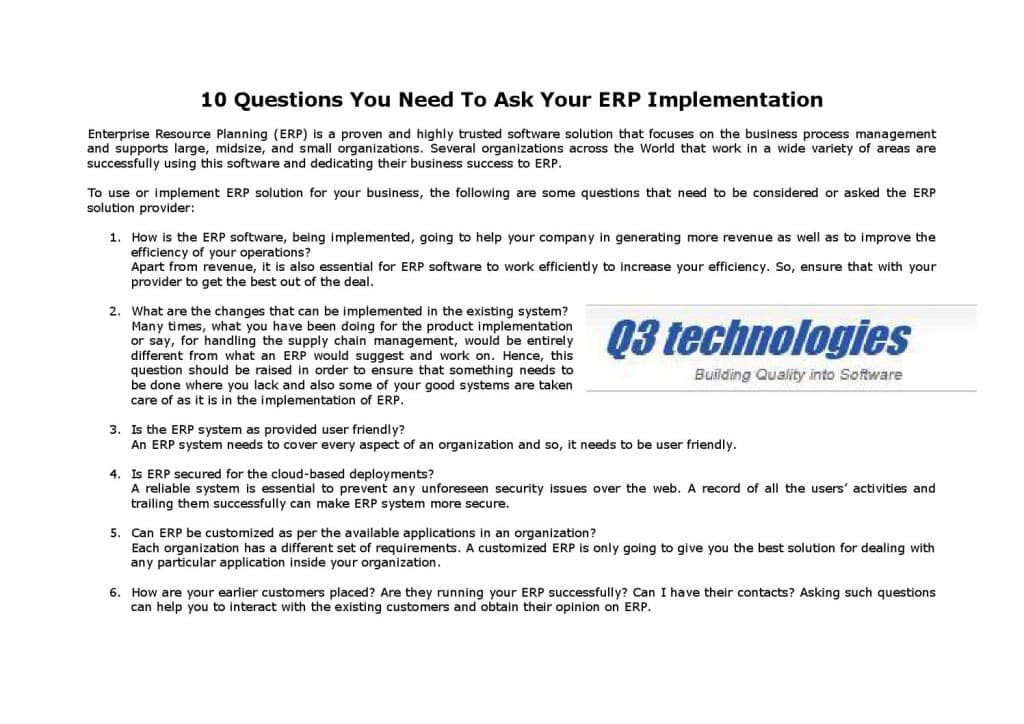
Enterprise Resource Planning (ERP) systems have become an essential tool for businesses of all sizes. These systems integrate various departments and functions within an organization, streamlining processes and facilitating better decision-making. However, implementing an ERP system can be a complex and daunting task, and business leaders often have many questions before embarking on this journey. In this article, we will address common questions on ERP and provide answers to help you make informed decisions.
Implementing an ERP system involves significant time, resources, and financial investment. Therefore, it is crucial to have a clear understanding of the key aspects of ERP before proceeding. Let’s dive into some of the most commonly asked questions to shed light on the subject.
1. What is ERP and why is it important for businesses?
2. What are the benefits of implementing an ERP system?
3. What are the different types of ERP systems available in the market?
See these questions on ERP
- 4. How does an ERP system help in improving operational efficiency?
- 5. What are the key features to consider when choosing an ERP system?
- 6. How long does it take to implement an ERP system?
- 7. What are the common challenges faced during ERP implementation?
- 8. How can ERP integration with other systems be achieved?
- 9. What are the security measures in place to protect ERP data?
- 10. How does an ERP system support financial management?
- 11. How can ERP enhance supply chain management?
- 12. What are the considerations for ERP system scalability?
- 13. How does cloud-based ERP differ from on-premise ERP?
- 14. Can an ERP system be customized to fit specific business needs?
- 15. What are the key factors to consider when selecting an ERP vendor?
- 16. How does an ERP system handle inventory management?
- 17. What are the potential risks of ERP implementation?
- 18. How does an ERP system improve customer relationship management?
- 19. What are the training and support options available for ERP users?
- 20. How can an ERP system help in streamlining HR processes?
- 21. What are the costs associated with ERP implementation?
- 22. Can an ERP system be integrated with existing legacy systems?
- 23. How does an ERP system facilitate data analytics and reporting?
- 24. What are the considerations for mobile access to ERP systems?
- 25. How does an ERP system handle multi-currency transactions?
- 26. What are the potential risks of ERP data migration?
- 27. How can an ERP system improve project management?
- 28. What are the key performance indicators (KPIs) to measure ERP success?
- 29. How does an ERP system handle compliance requirements?
- 30. What are the considerations for ERP system upgrades?
- 31. Can an ERP system integrate with e-commerce platforms?
- 32. How does an ERP system handle manufacturing processes?
- 33. What are the considerations for international ERP implementations?
- 34. How can an ERP system improve collaboration and communication?
- 35. What are the potential risks of ERP system downtime?
- 36. How does an ERP system support quality management?
- 37. What are the considerations for data migration to an ERP system?
- 38. Can an ERP system be accessed remotely?
- 39. How does an ERP system handle sales and order management?
- 40. What are the potential risks of ERP system customization?
These are just a few of the many questions that arise when considering the implementation of an ERP system. Consulting with experts and conducting thorough research will help you make informed decisions and ensure a successful ERP implementation that meets your business needs.






