
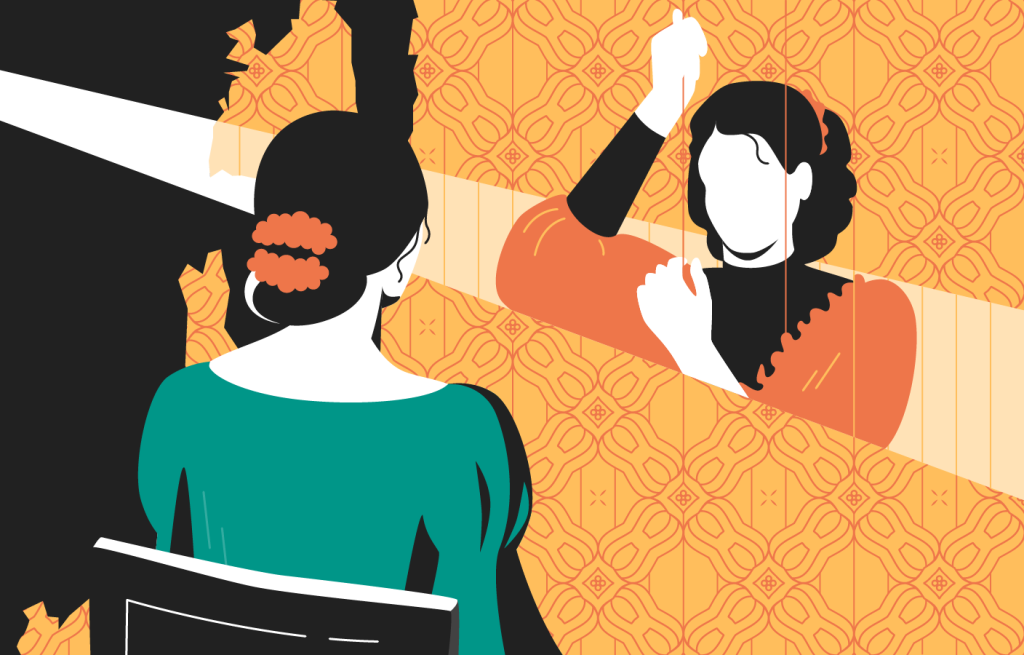
The Yellow Wallpaper, written by Charlotte Perkins Gilman in 1892, is a powerful short story that explores the restrictive gender roles imposed on women during the late 19th century. Through vivid descriptions and a haunting narrative, Gilman delves into the psychological effects of these gender roles on women’s mental health. The story, which is often regarded as a feminist classic, highlights the need for women’s liberation and challenges societal norms surrounding gender roles.
In The Yellow Wallpaper, the protagonist, a woman suffering from postpartum depression, is confined to a room with yellow wallpaper by her husband, who believes that rest and isolation will cure her. As the story progresses, the wallpaper becomes a symbol of the societal constraints placed on women during that era. The protagonist’s gradual descent into madness reflects the detrimental effects of these gender roles.
This article presents a collection of quotes from The Yellow Wallpaper that shed light on the theme of gender roles and the oppressive nature of societal expectations. These quotes provide insight into the protagonist’s struggles and the larger issue of women’s oppression during the late 19th century.
Read these quotes from The Yellow Wallpaper about gender roles:
“It is the strangest yellow, that wallpaper! It makes me think of all the yellow things I ever saw—not beautiful ones like buttercups, but old foul, bad yellow things.”
“And she is all the time trying to climb through. But nobody could climb through that pattern—it strangles so; I think that is why it has so many heads.”
“On a pattern like this, by daylight, there is a lack of sequence, a defiance of law, that is a constant irritant to a normal mind.”
“I get positively angry with the impertinence of it and the everlastingness. Up and down and sideways they crawl, and those absurd, unblinking eyes are everywhere.”
“I never saw a worse paper in my life. One of those sprawling flamboyant patterns committing every artistic sin.”
“The faint figure behind seemed to shake the pattern, just as if she wanted to get out. I got up softly and went to feel and see if the paper did move, and when I came back, John was awake.”
“Life is very much more exciting now than it used to be. You see I have something more to expect, to look forward to, to watch. I really do eat better, and am more quiet than I was.”
“It is so discouraging not to have any advice and companionship about my work. When I get really well, John says we will ask Cousin Henry and Julia down for a long visit; but he says he would as soon put fire-works in my pillow-case as to let me have those stimulating people about now.”
“I don’t like to look out of the windows even—there are so many of those creeping women, and they creep so fast. I wonder if they all come out of that wallpaper as I did?”
“I’ve got out at last,” said I, “in spite of you and Jane. And I’ve pulled off most of the paper, so you can’t put me back!”
“Now why should that man have fainted? But he did, and right across my path by the wall, so that I had to creep over him every time!”
“I’ve got a rope up here that even Jennie did not find. If that woman does get out, and tries to get away, I can tie her!”
“I think that woman gets out in the daytime! And I’ll tell you why—privately—I’ve seen her! I can see her out of every one of my windows!”
“I’ve got out at last,” said I, “in spite of you and Jane. And I’ve pulled off most of the paper, so you can’t put me back!”
“I’ve got a rope up here that even Jennie did not find. If that woman does get out, and tries to get away, I can tie her!”
“I think that woman gets out in the daytime! And I’ll tell you why—privately—I’ve seen her! I can see her out of every one of my windows!”
“At night in any kind of light, in twilight, candlelight, lamplight, and worst of all by moonlight, it becomes bars! The outside pattern I mean, and the woman behind it is as plain as can be.”
“I don’t want to leave now until I have found it out. There is a week more, and I think that will be enough.”
“I’ve got a rope up here that even Jennie did not find. If that woman does get out, and tries to get away, I can tie her!”
“I think that woman gets out in the daytime! And I’ll tell you why—privately—I’ve seen her! I can see her out of every one of my windows!”
“At night in any kind of light, in twilight, candlelight, lamplight, and worst of all by moonlight, it becomes bars! The outside pattern I mean, and the woman behind it is as plain as can be.”
These quotes from The Yellow Wallpaper provide a glimpse into the protagonist’s struggle against the oppressive gender roles imposed upon her. Through her vivid descriptions and haunting narrative, Charlotte Perkins Gilman challenges societal norms and advocates for women’s liberation. The Yellow Wallpaper serves as a powerful reminder of the importance of breaking free from restrictive gender roles and embracing individuality and freedom.






