
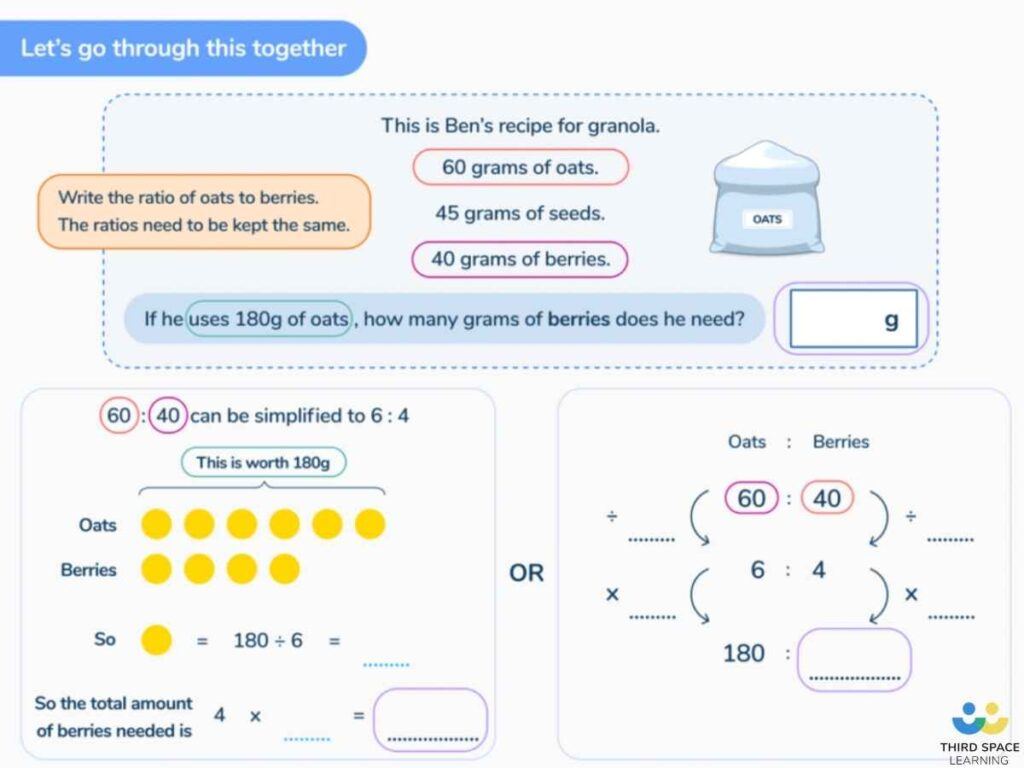
A ratio is a mathematical comparison between two or more quantities. It is a way of expressing the relationship between different elements or parts of a whole. Ratios are widely used in various fields, including finance, economics, and statistics. Understanding ratios is essential for solving problems and making informed decisions. In this article, we will explore some common ratio questions and provide answers to help you grasp the concept better.
Before we dive into the questions, let’s briefly understand how ratios work. Ratios are typically expressed in the form of “a:b” or “a to b.” The first number (a) represents the quantity of the first element, while the second number (b) represents the quantity of the second element. For example, if you have 2 red apples and 3 green apples, the ratio of red apples to green apples is 2:3.
Now, let’s move on to the ratio questions and answers:
See these Ratio Questions and Answers
- What is the ratio of boys to girls in a class with 20 boys and 30 girls?
- If a recipe calls for a ratio of 2 cups of flour to 1 cup of sugar, how much flour should you use if you have 3 cups of sugar?
- In a bag of marbles, the ratio of red marbles to blue marbles is 3:5. If there are 24 red marbles, how many blue marbles are there?
- A map has a scale of 1:5000. If the distance between two cities on the map is 10 centimeters, what is the actual distance between the cities?
- John solved 15 math problems in 30 minutes. How many problems can he solve in 1 hour?
- If a car travels 360 miles in 6 hours, what is its average speed?
- The ratio of students to teachers in a school is 30:1. If there are 600 students, how many teachers are there?
- A recipe calls for a ratio of 3 tablespoons of sugar to 4 cups of flour. How much flour should you use if you have 6 tablespoons of sugar?
- In a bag of candy, the ratio of chocolate to gummy bears is 4:7. If there are 28 chocolate pieces, how many gummy bears are there?
- What is the ratio of the length to the width of a rectangle with a length of 12 inches and a width of 8 inches?
- If a car gets 25 miles per gallon of gas, how many gallons of gas does it need to travel 500 miles?
- The ratio of red balls to blue balls in a bag is 2:3. If there are 10 blue balls, how many red balls are there?
- What is the ratio of the circumference to the diameter of a circle?
- If a recipe calls for a ratio of 1 teaspoon of salt to 2 cups of flour, how much salt should you use if you have 4 cups of flour?
- In a class of 40 students, the ratio of boys to girls is 2:3. How many girls are in the class?
- A map has a scale of 1:25000. If the distance between two towns on the map is 5 centimeters, what is the actual distance between the towns?
- If a train travels 300 miles in 4 hours, what is its average speed?
- The ratio of apples to oranges in a basket is 5:2. If there are 15 oranges, how many apples are there?
- What is the ratio of the area to the perimeter of a square?
- If a car gets 30 miles per gallon of gas, how many gallons of gas does it need to travel 450 miles?
- The ratio of cats to dogs in a shelter is 3:7. If there are 21 dogs, how many cats are there?
- What is the ratio of the volume to the surface area of a cube?
- If a recipe calls for a ratio of 1 cup of milk to 3 cups of flour, how much milk should you use if you have 6 cups of flour?
- In a bag of candies, the ratio of lollipops to gummy worms is 2:5. If there are 16 lollipops, how many gummy worms are there?
- What is the ratio of the height to the base of a triangle?
- If a car gets 35 miles per gallon of gas, how many gallons of gas does it need to travel 525 miles?
- The ratio of boys to girls in a club is 4:9. If there are 36 girls, how many boys are there?
- A map has a scale of 1:100000. If the distance between two cities on the map is 8 centimeters, what is the actual distance between the cities?
- If a train travels 400 miles in 5 hours, what is its average speed?
- The ratio of lemons to oranges in a basket is 1:6. If there are 18 lemons, how many oranges are there?
- What is the ratio of the diagonal to the side length of a square?
- If a recipe calls for a ratio of 2 tablespoons of oil to 3 cups of flour, how much oil should you use if you have 5 cups of flour?
- In a class of 50 students, the ratio of boys to girls is 1:4. How many boys are in the class?
- A map has a scale of 1:50000. If the distance between two towns on the map is 7 centimeters, what is the actual distance between the towns?
- If a car travels 250 miles in 3 hours, what is its average speed?
- The ratio of strawberries to blueberries in a basket is 3:8. If there are 24 blueberries, how many strawberries are there?
- What is the ratio of the circumference to the radius of a circle?
- If a recipe calls for a ratio of 1 teaspoon of vanilla extract to 2 cups of flour, how much vanilla extract should you use if you have 4 cups of flour?
- In a bag of marbles, the ratio of green marbles to yellow marbles is 2:5. If there are 14 green marbles, how many yellow marbles are there?
- The ratio of the length to the width of a rectangle is 3:4. If the width is 6 inches, what is the length?
- If a car gets 20 miles per gallon of gas, how many gallons of gas does it need to travel 400 miles?
- The ratio of red balls to blue balls in a bag is 1:4. If there are 16 red balls, how many blue balls are there?
- What is the ratio of the area to the circumference of a circle?
- If a recipe calls for a ratio of 3 teaspoons of sugar to 5 cups of flour, how much sugar should you use if you have 8 cups of flour?
- In a class of 60 students, the ratio of boys to girls is 3:7. How many boys are in the class?
- A map has a scale of 1:20000. If the distance between two cities on the map is 6 centimeters, what is the actual distance between the cities?
- If a train travels 350 miles in 4 hours, what is its average speed?
- The ratio of apples to pears in a basket is 2:5. If there are 20 pears, how many apples are there?
These are just a few examples of ratio questions you may encounter. Remember, practice is key to mastering ratios. By solving various ratio problems, you will develop a better understanding of the concept and improve your problem-solving skills.
Now that you have seen these ratio questions and answers, you can start applying your knowledge to real-life situations and mathematical problems. Keep practicing, and soon ratios will become second nature to you!






