
John Keats, one of the most renowned Romantic poets, is celebrated for his exquisite poems that explore themes of love, beauty, and mortality. His works are known for their lyrical quality, rich imagery, and profound emotions. Keats’ romantic poems continue to captivate readers with their timeless appeal and profound insights into the human experience.
Born in London in 1795, John Keats began writing poetry at a young age and quickly gained recognition for his talent. Despite a short life marked by personal hardships, Keats left behind a remarkable collection of romantic poems that have stood the test of time.
In this article, we will explore some of the unique and beautiful romantic poems by John Keats that have left an indelible mark on English literature.
Unique and Beautiful Romantic Poems by John Keats
“Bright Star! Would I Were Steadfast as Thou Art”
“Ode to a Nightingale”
“La Belle Dame sans Merci”
“To Autumn”
“Ode on a Grecian Urn”
“The Eve of St. Agnes”
“When I Have Fears That I May Cease to Be”
“Endymion: A Poetic Romance”
“The Human Seasons”
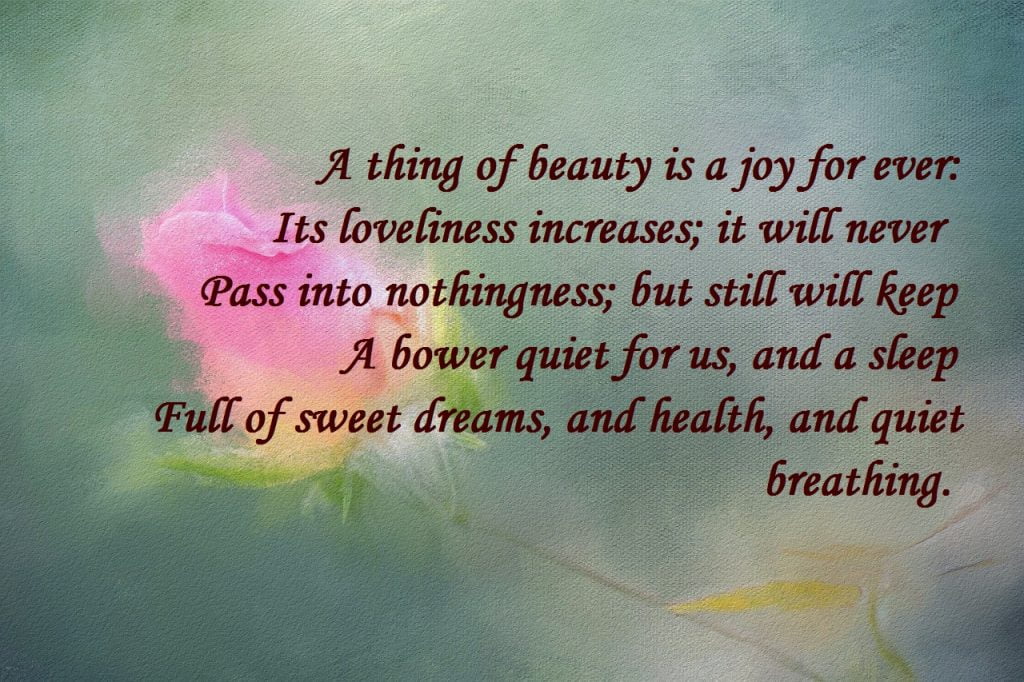
“A Thing of Beauty is a Joy Forever”
“Bright Star! Would I Were Steadfast as Thou Art” is a sonnet written by Keats expressing his desire for eternal love and companionship. It beautifully captures the longing for stability and constancy in a tumultuous world.
“Ode to a Nightingale” is considered one of Keats’ finest poems, where he delves into the themes of mortality and the power of art to transcend human suffering. The poem is a poignant exploration of the transience of life and the solace found in the beauty of nature.
“La Belle Dame sans Merci” is a ballad that tells the story of a knight who falls in love with a mysterious and enchanting woman. Keats’ hauntingly beautiful verses evoke a sense of melancholy and the fleeting nature of love.
“To Autumn” is a lyrical ode celebrating the beauty and abundance of the autumn season. Keats’ vivid descriptions and sensory imagery transport the reader to a world of harvest and bounty, making it one of his most beloved poems.
“Ode on a Grecian Urn” explores the themes of art, timelessness, and the limitations of human existence. Keats reflects on the immortality of art and the eternal beauty captured in a Grecian urn, offering a profound meditation on the nature of life and art.
“The Eve of St. Agnes” is a narrative poem that tells the story of a forbidden love affair. Keats’ evocative language and vivid descriptions create a sense of mystery and enchantment, making it a captivating tale of love and longing.
“When I Have Fears That I May Cease to Be” is a sonnet in which Keats confronts his fears of dying before fulfilling his poetic potential. It explores the anxieties and aspirations of an artist, capturing the essence of Keats’ own struggles and aspirations.
“Endymion: A Poetic Romance” is an epic poem in which Keats weaves a tale of love, adventure, and spiritual awakening. It showcases his mastery of language and his ability to create a vivid and enchanting world for the reader.
“The Human Seasons” is a reflective poem that compares the different stages of human life to the changing seasons. Keats’ introspective verses explore the complexities of human existence, highlighting the inevitable cycles of growth, decay, and renewal.
“A Thing of Beauty is a Joy Forever” is a line from Keats’ longer poem “Endymion.” It encapsulates the essence of Keats’ romantic philosophy, celebrating the enduring power of beauty to bring joy and inspiration to the world.
These are just a few examples of the unique and beautiful romantic poems created by John Keats. His works continue to resonate with readers, inviting them to explore the depths of human emotions and the timeless themes of love and beauty.
Whether it is the melancholic beauty of “Ode to a Nightingale” or the enchanting narrative of “The Eve of St. Agnes,” Keats’ romantic poems remain a testament to his enduring legacy as one of the greatest poets of the Romantic era.






