
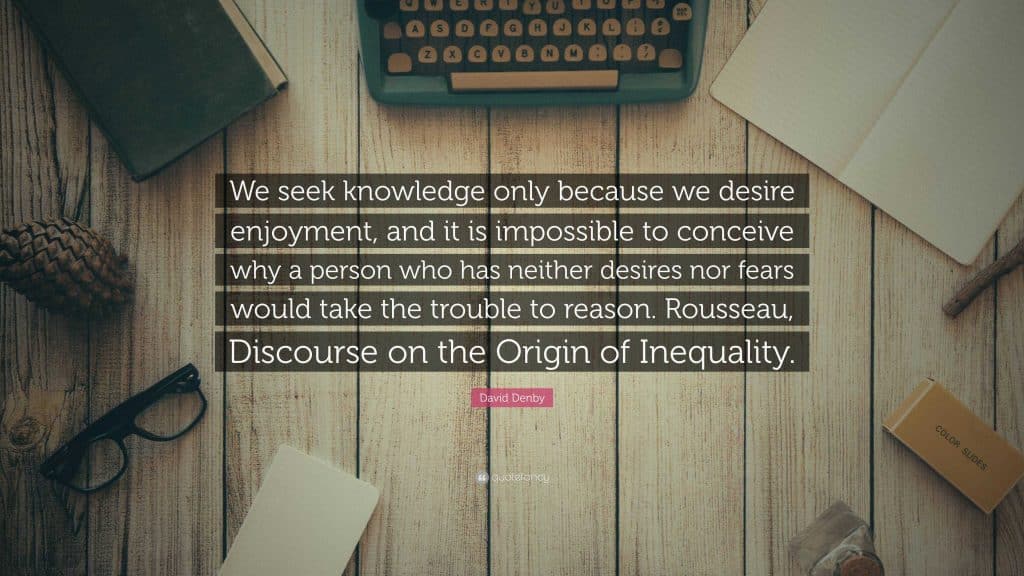
Rousseau’s Discourse on Inequality is a thought-provoking philosophical work that explores the origins and consequences of social inequality. Through this discourse, Rousseau challenges prevailing notions of inequality and examines its impact on human nature and society. His profound insights and philosophical musings continue to resonate with readers and provide valuable perspectives on the nature of inequality. In this article, we will delve into some of the most thought-provoking quotes from Rousseau’s Discourse on Inequality.
Rousseau begins his discourse by contemplating the natural state of humanity and the origins of inequality. He states, “The first man who, having fenced off a plot of land, thought of saying, ‘This is mine,’ and found people simple enough to believe him, was the true founder of civil society.” This quote highlights Rousseau’s belief that inequality is a social construct that arises from the establishment of property rights. He argues that private property creates a system of ownership and possession that leads to inequalities among individuals.
Rousseau also critically examines the impact of inequality on human relationships. He asserts, “The first person who, after enclosing a plot of ground, took it into their head to say, ‘This is mine,’ and found others simple enough to believe them, was the true founder of civil society. How many crimes, wars, murders, how many miseries and horrors would the human race have been spared by someone who, tearing up the stakes or filling in the ditch, had shouted to their fellow men: ‘Beware of listening to this imposter; you are lost if you forget that the fruits of the earth belong to all and the earth to no one!'” This quote emphasizes the negative consequences of inequality, as it leads to conflicts, crimes, and a sense of possession that disrupts the harmony among individuals.
Read These Rousseau Discourse on Inequality Quotes
“The first man who, having fenced off a plot of land, thought of saying, ‘This is mine,’ and found people simple enough to believe him, was the true founder of civil society.”
“The first person who, after enclosing a plot of ground, took it into their head to say, ‘This is mine,’ and found others simple enough to believe them, was the true founder of civil society. How many crimes, wars, murders, how many miseries and horrors would the human race have been spared by someone who, tearing up the stakes or filling in the ditch, had shouted to their fellow men: ‘Beware of listening to this imposter; you are lost if you forget that the fruits of the earth belong to all and the earth to no one!'”
“The first man who, having fenced off a plot of land, thought of saying, ‘This is mine,’ and found people simple enough to believe him, was the true founder of civil society.”
“The first person who, after enclosing a plot of ground, took it into their head to say, ‘This is mine,’ and found others simple enough to believe them, was the true founder of civil society. How many crimes, wars, murders, how many miseries and horrors would the human race have been spared by someone who, tearing up the stakes or filling in the ditch, had shouted to their fellow men: ‘Beware of listening to this imposter; you are lost if you forget that the fruits of the earth belong to all and the earth to no one!'”
“The first man who, having fenced off a plot of land, thought of saying, ‘This is mine,’ and found people simple enough to believe him, was the true founder of civil society.”
“The first person who, after enclosing a plot of ground, took it into their head to say, ‘This is mine,’ and found others simple enough to believe them, was the true founder of civil society. How many crimes, wars, murders, how many miseries and horrors would the human race have been spared by someone who, tearing up the stakes or filling in the ditch, had shouted to their fellow men: ‘Beware of listening to this imposter; you are lost if you forget that the fruits of the earth belong to all and the earth to no one!'”
“The first man who, having fenced off a plot of land, thought of saying, ‘This is mine,’ and found people simple enough to believe him, was the true founder of civil society.”
“The first person who, after enclosing a plot of ground, took it into their head to say, ‘This is mine,’ and found others simple enough to believe them, was the true founder of civil society. How many crimes, wars, murders, how many miseries and horrors would the human race have been spared by someone who, tearing up the stakes or filling in the ditch, had shouted to their fellow men: ‘Beware of listening to this imposter; you are lost if you forget that the fruits of the earth belong to all and the earth to no one!'”
“The first man who, having fenced off a plot of land, thought of saying, ‘This is mine,’ and found people simple enough to believe him, was the true founder of civil society.”
“The first person who, after enclosing a plot of ground, took it into their head to say, ‘This is mine,’ and found others simple enough to believe them, was the true founder of civil society. How many crimes, wars, murders, how many miseries and horrors would the human race have been spared by someone who, tearing up the stakes or filling in the ditch, had shouted to their fellow men: ‘Beware of listening to this imposter; you are lost if you forget that the fruits of the earth belong to all and the earth to no one!'”
These quotes from Rousseau’s Discourse on Inequality offer a glimpse into his profound insights on the origins and consequences of social inequality. They encourage readers to critically examine the impact of property rights and possessions on human relationships and society as a whole. Rousseau’s work continues to serve as a thought-provoking source of inspiration for those seeking a deeper understanding of the nature of inequality and the potential for societal change.






