
Applying for a job in the field of web development often requires a strong understanding of different programming concepts and frameworks. One such framework that is commonly used in web development is RxJS. RxJS, which stands for Reactive Extensions for JavaScript, is a library for composing asynchronous and event-based programs. If you are preparing for an interview that includes questions on RxJS, it’s essential to familiarize yourself with the framework and its core concepts. In this article, we will provide you with a comprehensive list of RxJS interview questions to help you prepare for your upcoming interview.
Before we dive into the interview questions, let’s briefly discuss what RxJS is and why it is widely used in web development. RxJS is a reactive programming library that allows you to work with asynchronous data streams. It provides a set of powerful operators that enable you to manipulate and transform these data streams easily. RxJS is commonly used in applications that require real-time data updates, such as chat applications, stock tickers, and sensor data processing.
Now that you have a basic understanding of RxJS let’s explore some common interview questions that you might encounter when applying for a web development job:
See these RxJS interview questions:
- What is RxJS and why is it used in web development?
- Explain the concept of Observables in RxJS.
- What are the advantages of using RxJS over traditional callback-based programming?
- What are the core operators in RxJS?
- How can you create an Observable in RxJS?
- What is the purpose of subscribing to an Observable?
- How can you handle errors in RxJS?
- What is the difference between Hot and Cold Observables?
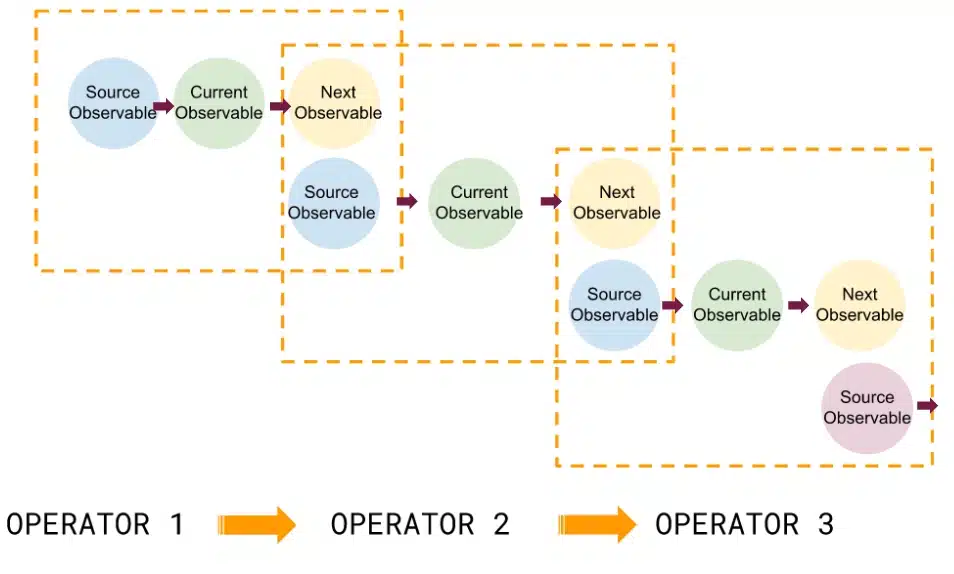
- Explain the concept of Operators in RxJS.
- What is the difference between mergeMap and switchMap in RxJS?
- How can you cancel an ongoing subscription in RxJS?
- What is the purpose of using the debounceTime operator in RxJS?
- How can you create a Subject in RxJS?
- What is the purpose of using the shareReplay operator in RxJS?
- Explain the concept of multicasting in RxJS.
- What is the purpose of using the retry operator in RxJS?
- How can you combine multiple Observables in RxJS?
- What is the difference between forkJoin and combineLatest in RxJS?
- How can you handle backpressure in RxJS?
- What is the purpose of using the bufferTime operator in RxJS?
- Explain the concept of Schedulers in RxJS.
- What is the purpose of using the takeUntil operator in RxJS?
- How can you create a custom operator in RxJS?
- What is the purpose of using the throttleTime operator in RxJS?
- Explain the concept of Subjects in RxJS.
- What is the purpose of using the map operator in RxJS?
- How can you handle async operations in RxJS?
- What is the purpose of using the distinctUntilChanged operator in RxJS?
- Explain the concept of Higher-Order Observables in RxJS.
- What is the purpose of using the take operator in RxJS?
- How can you handle concurrent requests in RxJS?
- What is the purpose of using the catchError operator in RxJS?
- Explain the concept of Marble Testing in RxJS.
- What is the purpose of using the scan operator in RxJS?
- How can you handle time-based events in RxJS?
- What is the purpose of using the distinct operator in RxJS?
- Explain the concept of Error Handling in RxJS.
- What is the purpose of using the combineAll operator in RxJS?
- How can you handle race conditions in RxJS?
- What is the purpose of using the pluck operator in RxJS?
- Explain the concept of Transformation Operators in RxJS.
- What is the purpose of using the withLatestFrom operator in RxJS?
- How can you handle empty Observables in RxJS?
- What is the purpose of using the concat operator in RxJS?
- Explain the concept of Filtering Operators in RxJS.
These are just a few examples of the potential RxJS interview questions you may face during your job search. It’s important to study and practice your understanding of RxJS to confidently answer these questions and demonstrate your expertise in the field of web development.






