
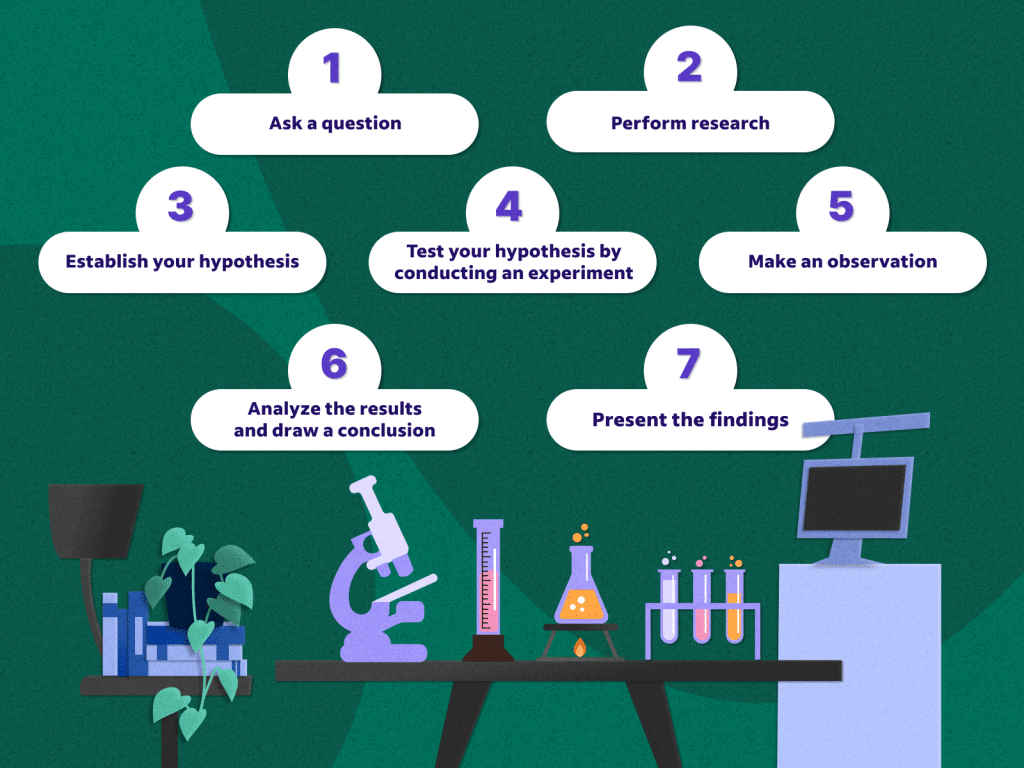
The scientific method is a systematic approach used by scientists to investigate and understand the natural world. It involves a series of steps that help scientists form hypotheses, conduct experiments, analyze data, and draw conclusions. Testing your knowledge of the scientific method can be a great way to reinforce your understanding of this fundamental process. In this article, we have compiled a list of quiz questions related to the scientific method that can help you test your knowledge and deepen your understanding.
By answering these quiz questions, you can assess your familiarity with the various steps of the scientific method, such as observation, hypothesis formation, experimentation, data analysis, and conclusion drawing. Whether you are a student studying science or simply someone interested in learning more about the scientific method, these quiz questions can provide an engaging and educational experience.
So, without further ado, let’s dive into the world of scientific method quiz questions and put your knowledge to the test!
See these scientific method quiz questions
- What is the first step of the scientific method?
- What is the purpose of making observations in the scientific method?
- What is a hypothesis?
- What is the difference between an independent variable and a dependent variable?
- What is the importance of having a control group in an experiment?
- What is a scientific theory?
- What are the characteristics of a good scientific experiment?
- What is the purpose of conducting statistical analysis on experimental data?
- What are the limitations of the scientific method?
- What is the role of peer review in the scientific method?
- Why is it important to replicate experiments?
- What is the difference between qualitative and quantitative data?
- What is the purpose of creating graphs and charts in scientific research?
- What is the significance of sample size in an experiment?
- What is an empirical study?
- What is the difference between a null hypothesis and an alternative hypothesis?
- What is the purpose of randomization in experimental design?
- What is the difference between a population and a sample?
- What is the role of ethics in scientific research?
- What is the purpose of conducting literature reviews in scientific research?
- What is the importance of controlling variables in an experiment?
- What is the difference between a scientific law and a scientific theory?
- What is the role of skepticism in the scientific method?
- What is the purpose of using a double-blind procedure in experiments?
- What are the different types of research designs used in scientific studies?
- What is the purpose of peer-reviewed journals in scientific research?
- What is the difference between deductive and inductive reasoning?
- What is the role of replication in establishing the validity of a scientific finding?
- What is the importance of operational definitions in scientific research?
- What is the role of hypotheses in the scientific method?
- What is the purpose of statistical significance in data analysis?
- What is the difference between a primary source and a secondary source in scientific research?
- What is the significance of peer feedback in the scientific community?
- What is the purpose of conducting pilot studies in scientific research?
- What is the role of replication in establishing the reliability of a scientific finding?
- What is the importance of random sampling in research?
- What is the difference between a cross-sectional study and a longitudinal study?
- What is the purpose of using control variables in an experiment?
- What is the significance of statistical power in data analysis?
- What is the difference between a hypothesis and a prediction?
- What is the role of statistical inference in drawing conclusions from data?
- What is the importance of peer collaboration in scientific research?
- What is the purpose of using standard deviation in data analysis?
- What is the difference between random assignment and random selection in experimental design?
- What is the role of replication in establishing the generalizability of a scientific finding?
These are just a few examples of the scientific method quiz questions you can find. By answering these questions and seeking out more, you can enhance your understanding of the scientific method and its applications in various fields of study.
Remember, the scientific method is a cornerstone of scientific inquiry and critical thinking. By familiarizing yourself with its principles and processes, you can approach scientific research and problem-solving with a systematic and evidence-based approach.






