
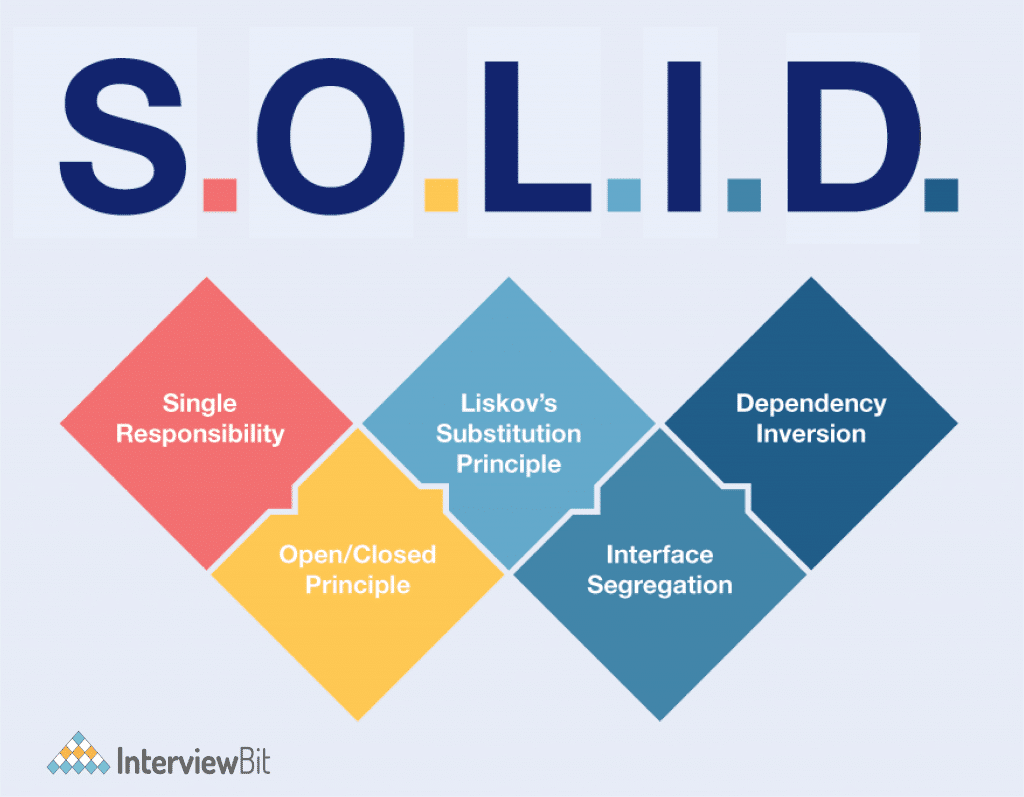
The SOLID principles are a set of five design principles that are widely used in object-oriented programming. These principles aim to make software designs more maintainable, flexible, and understandable. If you are preparing for a software development interview, it is important to have a good understanding of these principles and how they can be applied in real-world scenarios. In this article, we will provide you with a list of solid principles interview questions that can help you assess your knowledge and showcase your expertise in software design.
Before we dive into the interview questions, let’s quickly review the five SOLID principles:
- Single Responsibility Principle (SRP): A class should have only one reason to change.
- Open/Closed Principle (OCP): Software entities (classes, modules, functions, etc.) should be open for extension but closed for modification.
- Liskov Substitution Principle (LSP): Subtypes must be substitutable for their base types.
- Interface Segregation Principle (ISP): Clients should not be forced to depend on interfaces they do not use.
- Dependency Inversion Principle (DIP): High-level modules should not depend on low-level modules. Both should depend on abstractions.
See these solid principles interview questions
- What is the Single Responsibility Principle and why is it important in software design?
- How can you ensure that a class adheres to the Open/Closed Principle?
- What is the Liskov Substitution Principle and why is it important?
- Explain the difference between the Interface Segregation Principle and the Single Responsibility Principle.
- How does the Dependency Inversion Principle promote loose coupling and modularity?
- When should you use inheritance and when should you use composition?
- What are the benefits of using the SOLID principles in software development?
- How can you refactor a monolithic codebase to adhere to the SOLID principles?
- What are some common code smells that violate the SOLID principles?
- How can you test code that adheres to the SOLID principles?
- What are some potential drawbacks or challenges of applying the SOLID principles?
- Can you provide an example of a real-world software design that demonstrates the SOLID principles?
- What is the difference between cohesion and coupling in software design?
- How can you ensure that a codebase remains flexible and maintainable over time?
- What are some techniques for reducing code duplication and increasing code reuse?
- How do the SOLID principles relate to other design principles, such as DRY (Don’t Repeat Yourself) and KISS (Keep It Simple, Stupid)?
- What are some strategies for introducing the SOLID principles to a team that has not used them before?
- How can you handle dependencies between modules or classes in a way that adheres to the Dependency Inversion Principle?
- What are some alternatives to the SOLID principles for achieving good software design?
- How do the SOLID principles apply to different programming paradigms, such as functional programming or procedural programming?
- What are some common misconceptions or misunderstandings about the SOLID principles?
- Can you provide an example of a situation where violating one SOLID principle might lead to violating another?
- What role do design patterns play in the application of the SOLID principles?
- How do the SOLID principles contribute to the scalability and performance of a software system?
- What are some tools or techniques that can help enforce adherence to the SOLID principles?
- How can you measure the quality of a software design in terms of adherence to the SOLID principles?
- What are some considerations for applying the SOLID principles in a legacy codebase?
- What are some real-world examples of software projects or companies that have successfully applied the SOLID principles?
- What are some resources or references you recommend for learning more about the SOLID principles?
These solid principles interview questions should give you a good foundation for discussing software design and the benefits of adhering to the SOLID principles. Remember to provide clear and concise answers, and use examples or real-world scenarios to support your explanations. Good luck with your interview!






