
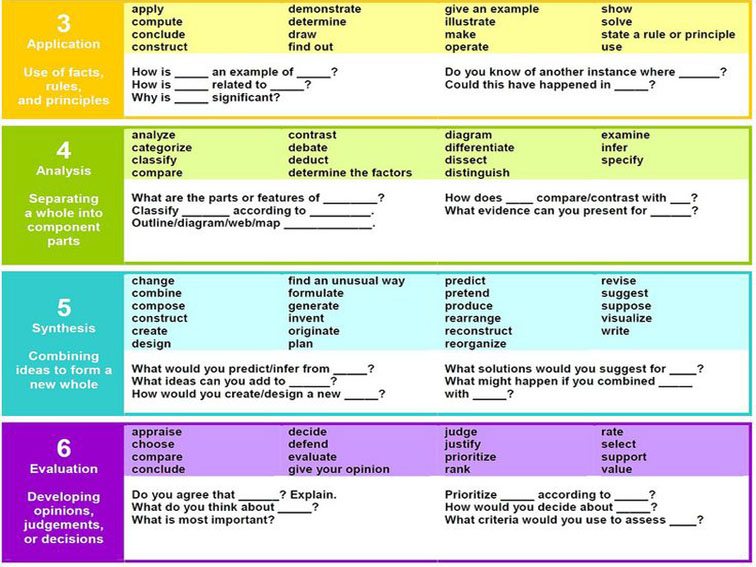
Stem questions, also known as guiding questions or essential questions, are a valuable tool in the field of education. Stem stands for Science, Technology, Engineering, and Mathematics, and these questions are designed to promote critical thinking, problem-solving, and deeper understanding within these disciplines. By asking open-ended questions that require students to think, analyze, and apply their knowledge, stem questions foster curiosity, creativity, and a lifelong love for learning.
Stem questions serve as the foundation for inquiry-based learning, a student-centered approach that encourages active exploration and investigation. Rather than simply memorizing facts, students are challenged to ask questions, seek answers, and make connections between concepts. This not only enhances their understanding of specific subjects but also develops essential skills such as communication, collaboration, and independent thinking.
Furthermore, stem questions provide a real-world context to learning, allowing students to see the relevance and applicability of what they are studying. By encouraging them to think like scientists, engineers, or mathematicians, these questions ignite a passion for discovery and innovation. Students become more engaged and motivated, as they are empowered to solve problems and find solutions to real-world challenges.
See these stem questions
- How does gravity affect the motion of objects?
- What are the environmental impacts of renewable energy sources?
- How do cells divide and reproduce?
- What are the ethical implications of genetic engineering?
- How does temperature affect the rate of chemical reactions?
- What is the relationship between force and acceleration?
- How do different ecosystems interact with each other?
- What are the potential applications of artificial intelligence?
- How does the human body respond to exercise?
- What are the advantages and disadvantages of nuclear power?
- What are the mathematical principles behind encryption algorithms?
- How do organisms adapt to their environments?
- What are the factors affecting population growth?
- How can technology help solve environmental problems?
- What are the stages of the water cycle?
- How does the human brain process and store information?
- What are the potential risks of space exploration?
- How do different cultures approach mathematical problem-solving?
- What is the impact of deforestation on biodiversity?
- How can we reduce the carbon footprint of transportation?
- What are the social and economic implications of artificial intelligence?
- How do chemical reactions occur at the molecular level?
- What are the engineering principles behind bridge construction?
- How do plants convert sunlight into energy through photosynthesis?
- What are the mathematical patterns found in nature?
- How does the Earth’s magnetic field protect us from solar radiation?
- What are the potential risks and benefits of genetic cloning?
- How do different types of waves propagate and interact?
- What are the factors influencing climate change?
- How can we design sustainable buildings using renewable materials?
- What are the principles behind space exploration and travel?
- How do different organisms contribute to the ecosystem?
- What are the mathematical principles behind data encryption?
- How does the human body maintain homeostasis?
- What are the potential applications of nanotechnology?
- How do different energy sources impact the environment?
- What are the engineering challenges in building a sustainable city?
- How does the human circulatory system work?
- What are the ethical considerations in scientific research?
- How do different organisms adapt to extreme environments?
- What are the factors affecting the rate of technological innovation?
- How can we use mathematics to predict and analyze patterns in nature?
- What are the potential benefits and risks of genetic modification?
- How does the human immune system defend against pathogens?
- What are the social and economic impacts of renewable energy?
These stem questions are just a glimpse of the vast possibilities that exist within the world of inquiry-based learning. By incorporating them into our classrooms and educational programs, we can inspire the next generation of innovators, problem-solvers, and critical thinkers.






