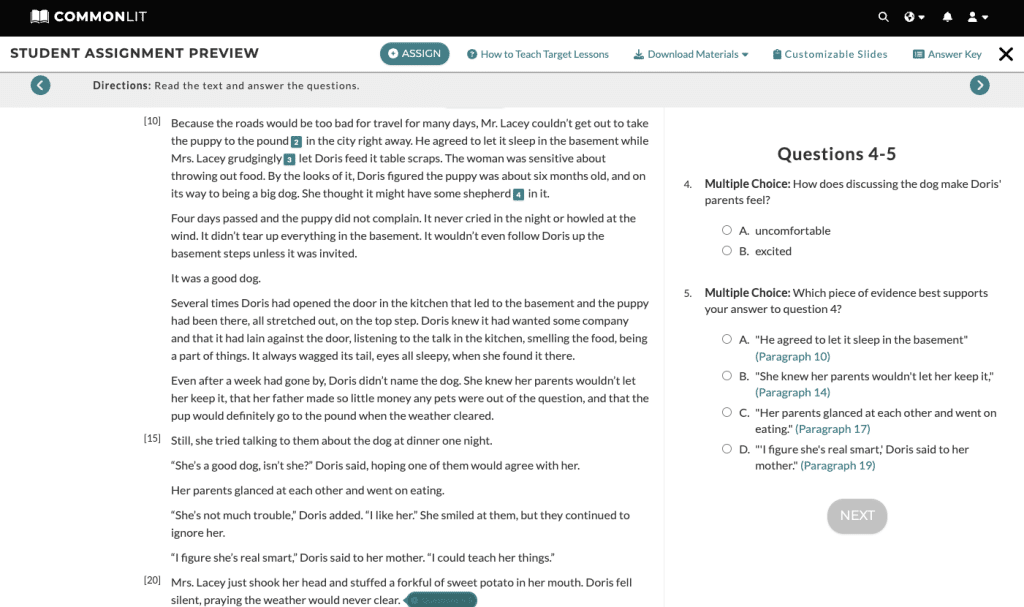
Text Dependent Questions (TDQs) are a valuable tool in the classroom to help students develop a deep understanding of a text. These questions require students to provide evidence from the text to support their answers, encouraging critical thinking and close reading skills. CommonLit, an online platform that offers a collection of high-quality, free reading passages and accompanying TDQs, is a popular resource among educators.
With CommonLit, teachers have access to a wide range of texts across various genres and subjects. Each passage is accompanied by a set of TDQs that prompt students to analyze the text and think critically about its meaning. These questions not only help students comprehend the passage but also develop important skills such as inference, analysis, and interpretation.
Whether you are a teacher looking for TDQs to use in your classroom or a student wanting to practice close reading skills, the answer key to the text dependent questions in CommonLit can be a valuable resource. The answer key provides the correct answers to each question, allowing students to check their understanding and providing teachers with a tool to assess student comprehension.
See these Text Dependent Questions CommonLit Answer Key
- What is the main idea of the passage?
- How does the author use imagery to convey a specific mood?
- What evidence from the text supports the author’s argument?
- What is the significance of the title?
- How does the author develop the theme throughout the passage?
- What is the author’s purpose in writing this passage?
- What does the word “_____” mean in context?
- What is the central conflict in the story?
- How does the author use foreshadowing to create suspense?
- What does the protagonist learn by the end of the passage?
- What is the tone of the passage?
- How does the author use figurative language to enhance the description?
- What is the relationship between the two main characters?
- What is the setting of the story?
- What is the author’s point of view?
- How does the author use dialogue to reveal character traits?
- What is the climax of the plot?
- How does the author create a sense of irony in the passage?
- What is the theme of the poem?
- What is the author’s tone towards the subject?
- How does the author use symbolism to convey a deeper meaning?
- What is the resolution of the conflict?
- What is the main argument presented in the persuasive essay?
- How does the author use repetition to emphasize a point?
- What is the central idea of the informational text?
- What is the author’s tone towards the opposing viewpoint?
- How does the author structure the argument in the passage?
- What is the purpose of the descriptive language in the passage?
- What is the role of the narrator in the story?
- How does the author use flashbacks to develop the plot?
- What is the effect of the author’s use of short sentences?
- What is the main cause of the problem presented in the passage?
- How does the author use alliteration to create a specific rhythm?
- What is the tone of the author’s voice in the memoir?
- How does the author use statistics to support their argument?
- What is the relationship between the historical events mentioned in the passage?
- What is the author’s perspective on the issue?
- How does the author use humor to engage the reader?
- What is the significance of the final line in the poem?
- What is the author’s tone towards the main character?
- How does the author use sensory details to create a vivid image?
- What is the main message of the speech?
- How does the author use anecdotes to support their argument?
These are just a few examples of the many text dependent questions that can be found in CommonLit. By using these questions, teachers can guide students towards a deeper understanding of the texts they read and help them develop critical thinking skills that will benefit them in all areas of their education.