
Thanatopsis is a renowned poem written by William Cullen Bryant in the early 19th century. This introspective piece explores the themes of death, nature, and the afterlife, inviting readers to contemplate their mortality and find solace in the beauty of the natural world. Such a profound poem naturally raises many questions, and in this article, we will delve into some commonly asked questions about Thanatopsis and provide answers to deepen your understanding of this timeless work.
Whether you are a student studying literature or simply a curious reader, these questions and answers will shed light on various aspects of Thanatopsis. From the meaning behind specific verses to the historical context in which it was written, these insights will enhance your appreciation of Bryant’s masterpiece.
So, let’s embark on a journey to unravel the mysteries of Thanatopsis and explore the questions that often arise when engaging with this thought-provoking poem.
See these Thanatopsis Questions and Answers
- What is the main theme of Thanatopsis?
- Who was William Cullen Bryant?
- When was Thanatopsis written?
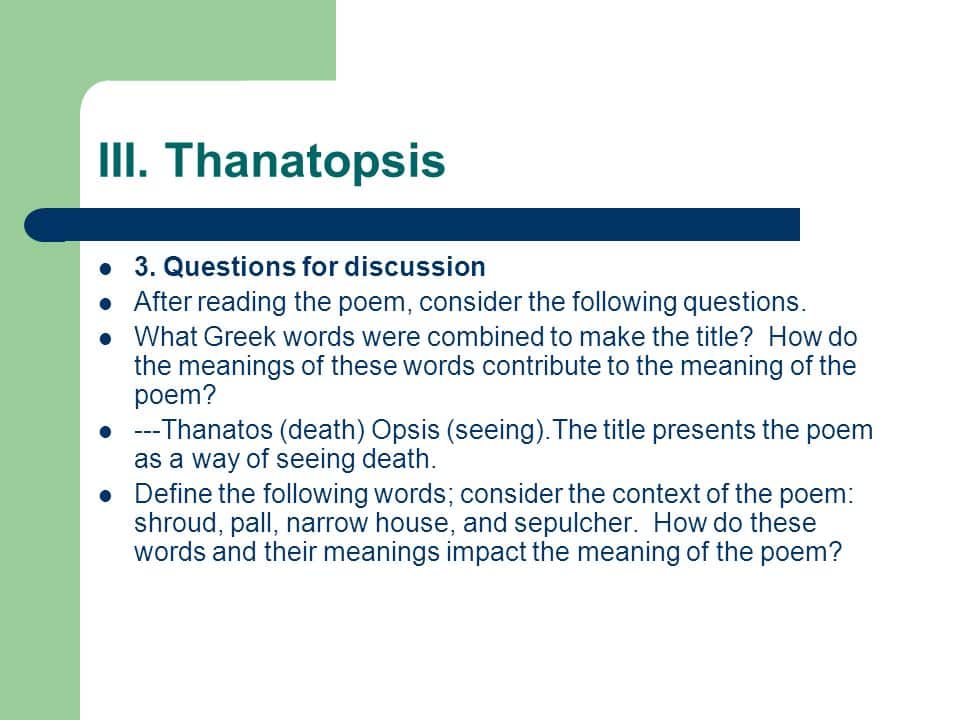
- What is the meaning of the word “Thanatopsis”?
- What is the structure of the poem?
- What is the significance of nature in Thanatopsis?
- What emotions does the poem evoke?
- What is the message of Thanatopsis?
- How does Thanatopsis view death?
- What is the role of religion in the poem?
- What is the historical context of Thanatopsis?
- What literary devices are used in Thanatopsis?
- What is the impact of Thanatopsis on American literature?
- How does Thanatopsis relate to the Transcendentalist movement?
- What is the significance of the opening lines of the poem?
- How does Thanatopsis explore the idea of immortality?
- What is the tone of the poem?
- How does Thanatopsis address the fear of death?
- What is the role of the speaker in the poem?
- What is the purpose of the concluding lines of the poem?
- What is the overall structure of the poem?
- How does Bryant use language to convey his ideas?
- What is the significance of the poem’s title?
- How does Thanatopsis celebrate the interconnectedness of life?
- What is the contrast between darkness and light in the poem?
- How does Thanatopsis inspire readers to embrace the inevitability of death?
- What is the role of nature in comforting the human soul?
- What is the relationship between the individual and the collective in Thanatopsis?
- What is the role of memory and remembrance in the poem?
- How does Thanatopsis challenge traditional views of death and the afterlife?
- What is the connection between Thanatopsis and the Romantic movement?
- How does Bryant use imagery to create vivid mental pictures?
- What are the main symbols in Thanatopsis?
- How does the poem encourage readers to find solace in nature?
- What is the role of philosophy in Thanatopsis?
- How does Thanatopsis explore the concept of eternity?
- What is the significance of the poem’s closing lines?
- How does Thanatopsis inspire a sense of unity with the natural world?
- What is the role of contemplation in the poem?
- What is the impact of Thanatopsis on modern poetry?
- How does the poem challenge conventional ideas about death and dying?
- What is the legacy of Thanatopsis in American literature?
- How does the poem encourage readers to embrace their own mortality?
- What is the role of beauty in confronting the reality of death?
These are just a few of the many questions that arise when exploring the depths of Thanatopsis. As you delve into this remarkable poem, remember that interpretation is subjective, and each reader may have a unique perspective. Allow yourself to be captivated by the beauty of Bryant’s words and embark on a personal journey of reflection and contemplation.






