
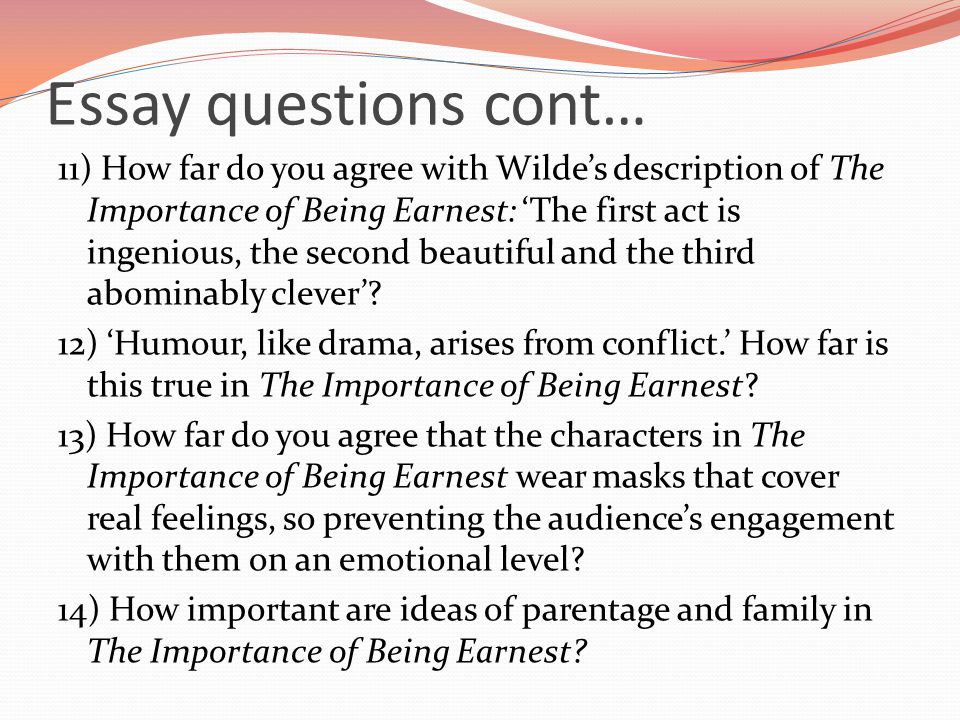
The Importance of Being Earnest, written by Oscar Wilde, is a classic play that explores themes of love, deception, and social expectations. As a teacher or a book club leader, it is important to engage your students or members in thoughtful discussions about the play. Discussion questions can help deepen their understanding of the characters, the plot, and the underlying messages of the play. In this article, we will provide you with a comprehensive list of discussion questions that can be used to facilitate meaningful conversations.
Before diving into the discussion questions, it is important to note that The Importance of Being Earnest is a satire that mocks the Victorian society. It is filled with witty dialogue, irony, and double entendre. Encourage your students or members to analyze the play from a historical and social perspective to fully appreciate its significance.
Now, let’s explore the discussion questions that will help stimulate insightful conversations about The Importance of Being Earnest:
See these The Importance of Being Earnest Discussion Questions
- How does Oscar Wilde use satire in The Importance of Being Earnest to criticize Victorian society?
- What role does the concept of “earnestness” play in the play? How does it contribute to the comedic elements?
- Discuss the theme of deception in the play. How do the characters deceive each other and themselves?
- Examine the portrayal of marriage in the play. What commentary does Wilde make about the institution of marriage?
- What is the significance of the character names in The Importance of Being Earnest? How do they reflect the characters’ personalities?
- Explore the theme of identity and appearance versus reality in the play. How do the characters present themselves versus who they truly are?
- Discuss the role of women in the play. How are they portrayed and what commentary does Wilde make about gender roles?
- Examine the use of wit and wordplay in the play. How does Wilde use these devices to create humor?
- Discuss the ending of the play. Is it a happy ending? Why or why not?
- What social criticisms does Wilde make through the characters of Lady Bracknell and Algernon?
- How does the setting of the play contribute to its overall tone and atmosphere?
- Examine the motif of food and dining in the play. What symbolic meanings can be derived from these references?
- Discuss the concept of morality in The Importance of Being Earnest. How do the characters navigate between societal expectations and their own desires?
- What role does class and social status play in the play? How do they influence the characters’ actions and decisions?
- Examine the relationship between Algernon and Jack. How do they contrast each other and what does their friendship represent?
- Discuss the theme of love in the play. Is it genuine or superficial? How do the characters’ views on love evolve?
- Explore the use of puns and wordplay in the play. How do they enhance the comedic elements?
- What is the significance of the handbag in the play? How does it contribute to the plot and the characters’ motivations?
- Discuss the role of Lady Bracknell in the play. How does she embody the ideals and values of the Victorian society?
- Examine the motif of mistaken identity in the play. How does it drive the plot forward and create comedic situations?
- What commentary does Wilde make about the nature of truth and honesty?
- Discuss the role of language in the play. How does Wilde use language to convey his messages and create humor?
- Examine the theme of individualism versus conformity in The Importance of Being Earnest. How do the characters navigate between these opposing forces?
- What is the significance of the handkerchief in the play? How does it symbolize the characters’ deceit and secrets?
- Discuss the theme of appearance versus reality in the play. How do the characters present themselves to society versus their true selves?
- Examine the role of music in the play. How does it contribute to the overall atmosphere and tone?
- What commentary does Wilde make about the role of education and knowledge in society?
- Discuss the theme of social masks and pretense in the play. How do the characters hide their true selves behind facades?
- How does Wilde use repetition and parallelism in the play to create comedic effect?
- Examine the motif of the countryside versus the city in The Importance of Being Earnest. What contrasts are presented?
- What commentary does Wilde make about the role of parents and family in society?
- Discuss the motif of love at first sight in the play. How does it drive the characters’ actions and decisions?
- Examine the role of the butlers in the play. How do they contribute to the comedic elements?
- What commentary does Wilde make about the nature of friendship?
- Discuss the theme of social expectations and obligations in the play. How do the characters navigate between their desires and societal pressures?
- Examine the motif of the diary in The Importance of Being Earnest. How does it reveal the characters’ secrets and motivations?
- What commentary does Wilde make about the nature of art and creativity?
- Discuss the role of gossip in the play. How does it drive the plot and create conflicts?
- Examine the theme of self-discovery and self-acceptance in the play. How do the characters come to terms with their true identities?
- What commentary does Wilde make about the nature of beauty and appearance?
- Discuss the motif of the hand in the play. How does it symbolize the characters’ actions and intentions?
- Examine the use of irony in The Importance of Being Earnest. How does it contribute to the overall comedic effect?
- What commentary does Wilde make about the nature of love and marriage?
These discussion questions are designed to encourage your students or members to delve into the complexities of The Importance of Being Earnest. By exploring the play’s themes, characters, and underlying messages, they will develop a deeper appreciation for Oscar Wilde’s masterpiece. Use these questions as a starting point for meaningful discussions that will enrich their understanding of the play.






