
The Veldt is a science fiction short story written by Ray Bradbury, first published in 1950. It tells the story of a futuristic house that is fully automated and capable of fulfilling every need of its inhabitants. The story raises questions about the role of technology in our lives and the potential consequences of its misuse.
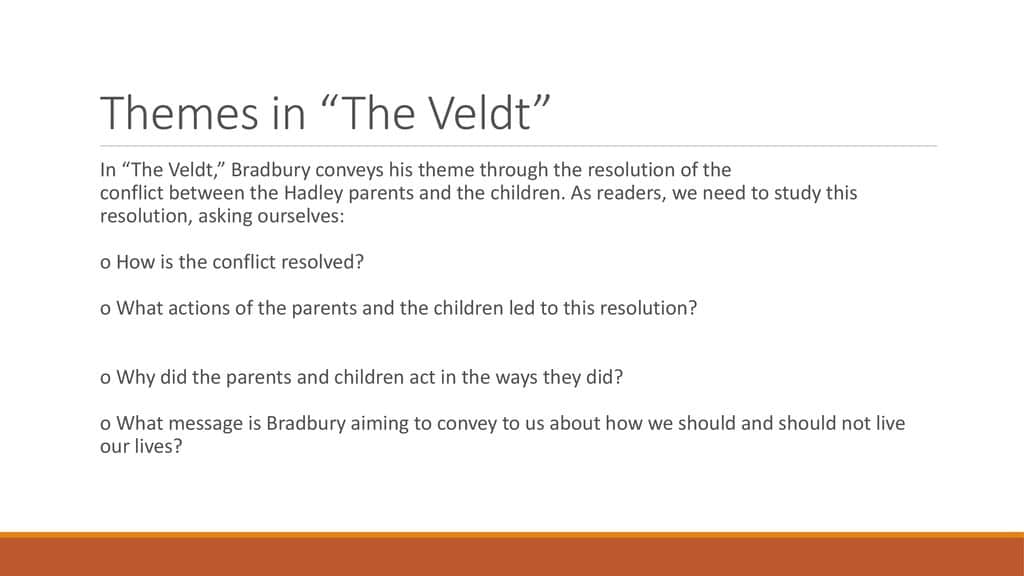
As readers, we are left pondering the implications of the story and the themes it presents. In order to further explore these ideas, here are some thought-provoking questions to consider while reading or discussing “The Veldt”.
1. What is the significance of the veldt in the story?
2. How does the automated house contribute to the character development?
3. What does the relationship between the children and the nursery reveal about their upbringing?
4. How does the theme of escapism tie into the story?
5. What role does Peter’s character play in the story?
6. How does the nursery mirror the children’s desires and emotions?
7. What is the purpose of the parents’ decision to turn off the automated house?
8. How does Bradbury use foreshadowing in the story?
9. What does the ending of the story suggest about the dangers of technology?
10. How does the setting contribute to the overall atmosphere of the story?
See these The Veldt questions
- 11. How does the story explore the theme of parental neglect?
- 12. What is the significance of the African veldt in relation to the children’s imagination?
- 13. How does the author convey a sense of unease throughout the story?
- 14. What is the role of the psychologist in the story, and how does he contribute to the plot?
- 15. How does the nursery’s ability to create realistic environments affect the children’s perception of reality?
- 16. What does the story suggest about the dangers of excessive reliance on technology?
- 17. How does the concept of virtual reality relate to the story?
- 18. What is the significance of the lions in the veldt?
- 19. How does the story comment on the impact of technology on family dynamics?
- 20. How does the use of personification enhance the portrayal of the automated house?
- 21. How does the veldt represent the children’s emotions and desires?
- 22. What is the role of the parents in the story, and how does their relationship with their children evolve?
- 23. How does the story address the theme of addiction?
- 24. What does the story suggest about the nature of reality and illusion?
- 25. How does Bradbury create a sense of suspense in the story?
- 26. What role does technology play in shaping the characters’ identities?
- 27. How does the story explore the concept of power?
- 28. What is the significance of the children’s resistance to the parents’ decision to turn off the nursery?
- 29. How does the story comment on the role of imagination in human life?
- 30. How does the automated house reflect the desires and fears of its inhabitants?
- 31. What does the story suggest about the relationship between humans and machines?
- 32. How does the nursery’s ability to fulfill the children’s every desire contribute to their emotional detachment?
- 33. What is the role of violence in the story?
- 34. How does the story address the theme of control?
- 35. What does the story suggest about the dangers of unchecked technology?
- 36. How does the story comment on the impact of consumerism on society?
- 37. What is the significance of the children’s manipulation of the nursery’s environment?
- 38. How does the story explore the theme of childhood innocence and corruption?
- 39. What is the role of nature in the story?
- 40. How does the story address the theme of responsibility?
These questions are designed to help you delve deeper into the themes and ideas presented in “The Veldt”. Feel free to explore these questions on your own or use them as discussion points in a book club or classroom setting. Happy reading!






