
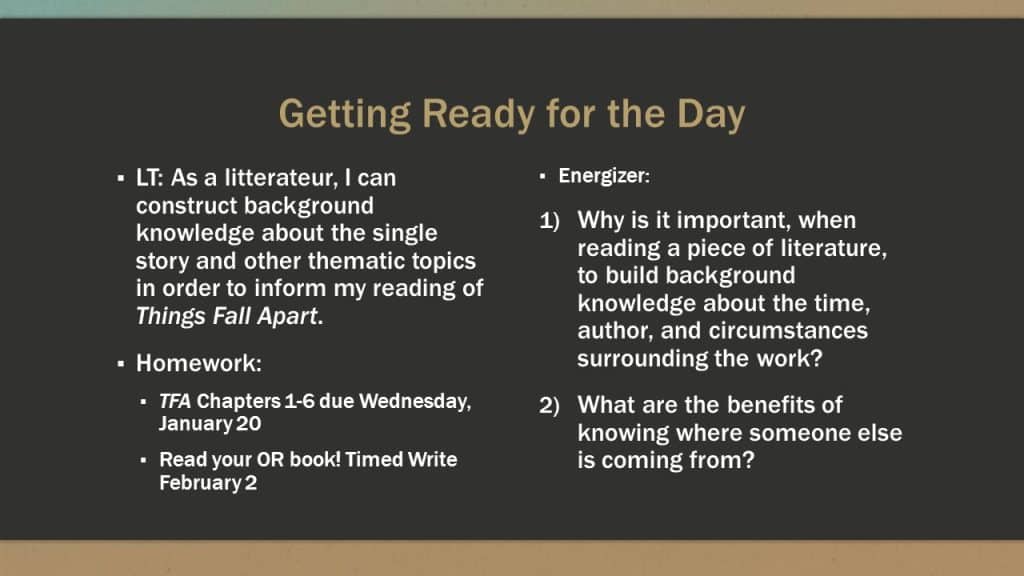
Things Fall Apart by Chinua Achebe is a thought-provoking novel that explores the clash between traditional African culture and the arrival of European colonialism. It tells the story of Okonkwo, a respected warrior and leader in the Igbo tribe, as his world begins to crumble with the advent of change. Socratic seminars are a valuable tool for exploring the complex themes and ideas presented in this novel. By engaging in thoughtful and open discussions, students can deepen their understanding and gain new perspectives. In this article, we will provide a comprehensive list of Socratic seminar questions specifically tailored for Things Fall Apart.
Before diving into the list of questions, it is important to understand the purpose of a Socratic seminar. Socratic seminars are designed to encourage critical thinking, active listening, and respectful dialogue. The questions posed during the seminar are open-ended, allowing for multiple interpretations and perspectives. The goal is not to find a single correct answer, but rather to explore the nuances and complexities of the text. It is essential to create a safe and inclusive environment where all participants feel comfortable sharing their thoughts and ideas.
Now, let’s explore a wide range of Socratic seminar questions that delve into the themes, characters, and symbolism found in Things Fall Apart:
See these Things Fall Apart Socratic Seminar Questions
- How does Okonkwo’s fear of weakness shape his actions throughout the novel?
- What role does the concept of masculinity play in the Igbo society?
- Discuss the significance of the yam harvest festival and its portrayal in the novel.
- How does the arrival of the missionaries challenge and disrupt traditional Igbo customs and beliefs?
- What is the significance of the title “Things Fall Apart” in relation to the novel’s themes?
- Examine the character of Ezinma and her role as a catalyst for change in the story.
- Discuss the importance of oracles and divination in the Igbo society.
- Explore the theme of exile and its impact on characters like Okonkwo and Nwoye.
- How does Achebe use language and storytelling to convey the richness of Igbo culture?
- Discuss the role of women in the novel and how their power is both limited and influential.
- Analyze the character of Obierika and his role as Okonkwo’s voice of reason.
- Examine the symbolism of the palm tree and its significance throughout the narrative.
- Discuss the impact of colonization on the Igbo language and identity.
- What does the novel suggest about the nature of power and its corrupting influence?
- Examine the role of religion and spirituality in the Igbo society.
- How does the concept of fate and destiny shape the actions of the characters?
- Discuss the theme of tradition versus progress in the novel.
- Examine the portrayal of violence in the novel and its effects on individuals and communities.
- What does the novel suggest about the importance of family and kinship?
- Analyze the character of Okonkwo’s father, Unoka, and his influence on Okonkwo’s life choices.
- Discuss the significance of the locusts and their arrival in the Igbo village.
- How does Achebe challenge Western stereotypes and misconceptions about African culture?
- Examine the theme of fear and its impact on the characters’ actions and decisions.
- What is the role of proverbs and storytelling in the novel?
- Discuss the theme of justice and how it is portrayed in the Igbo society.
- Examine the character of Mr. Brown and his approach to converting the Igbo people.
- How does the novel explore the concept of cultural identity and belonging?
- Discuss the significance of the egwugwu ceremony and its role in Igbo justice.
- Examine the theme of change and its effects on individuals and communities.
- What does the novel suggest about the human capacity for empathy and understanding?
- Discuss the role of music and dance in the Igbo culture.
- Analyze the character of Ekwefi and her relationship with Okonkwo.
- How does Achebe challenge the notion of a single “African” identity in the novel?
- Examine the theme of fate versus free will in the story.
- Discuss the influence of colonization on gender roles and expectations.
- What does the novel suggest about the power dynamics between colonizers and the colonized?
- Analyze the character of Ikemefuna and his impact on Okonkwo and Nwoye.
- How does the novel explore the concept of sacrifice?
- Discuss the significance of the chi and its role in shaping individual destinies.
- Examine the portrayal of education and its effects on characters like Nwoye.
- What does the novel suggest about the importance of cultural preservation?
- Analyze the character of Nwoye and his journey of self-discovery.
- How does Achebe challenge Eurocentric perspectives of history?
- Discuss the theme of pride and its consequences in the novel.
- Examine the role of religion in maintaining social order in the Igbo society.
- What lessons can be learned from the tragic downfall of Okonkwo?
These Socratic seminar questions are just a starting point for engaging discussions about Things Fall Apart. Feel free to modify and adapt them to suit the needs and interests of your students. Remember, the purpose of a Socratic seminar is to foster critical thinking and encourage dialogue, so embrace the diversity of opinions and interpretations that may arise during the discussion.






